Burgundy is the shade fall keeps coming back to, and it covers more ground than people expect. It runs from a bright wine red through to an oxblood so deep it reads black in low light, and those two ends of the range suit completely different hands.
What you will find here
Twenty-two designs below, from a flat creme you can do in twenty minutes to finishes worth booking a salon for. Difficulty, timing and materials on every one.
Picking the right burgundy
- Check the undertone before the depth. Burgundies lean either purple or brown. Purple-leaning wines look cooler and more formal; brown-leaning oxbloods look warmer and sit closer to the rest of the fall palette.
- Deep does not mean flattering by default. Very dark shades shorten the look of a nail. If yours are short, either leave the side walls bare or pick a lighter wine.
- Dark red stains. The pigment in burgundy is the worst offender in the whole fall palette. A base coat is not optional here.
- Finish changes the color. The same bottle reads brighter glossy, dustier matte, and almost brown under chrome powder. Buy one shade and get three.
22 burgundy nail designs
1 Classic burgundy creme
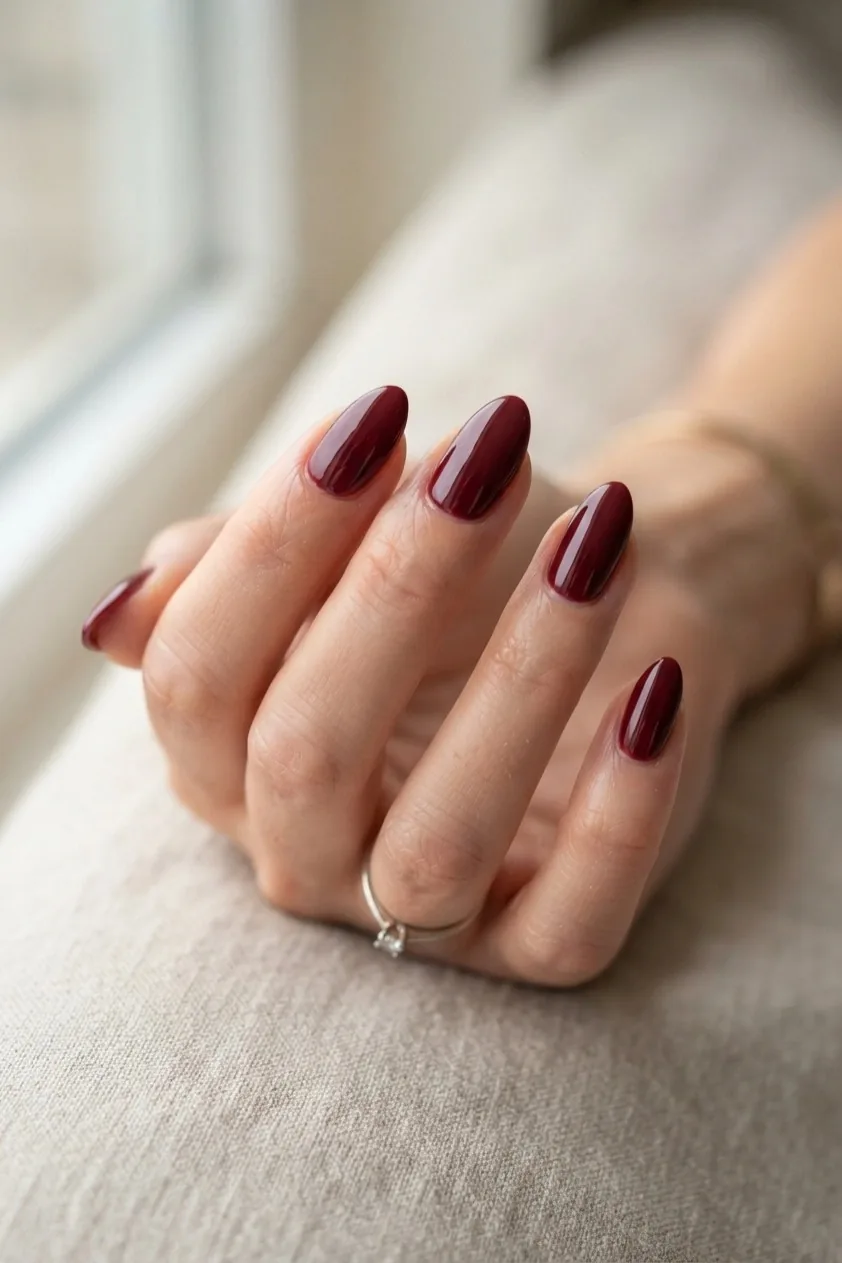
Two coats of a true wine creme and a gloss top coat. The baseline every other design here is a variation on. Two thin coats will look deeper and dry faster than one thick one, which is counterintuitive but holds for every dark shade.
2 Matte oxblood
The darkest, brownest end of burgundy under a flat matte top coat. Matte swallows the red and pushes the shade towards leather, which is why it photographs so differently from the bottle. It also hides ridges that gloss magnifies.
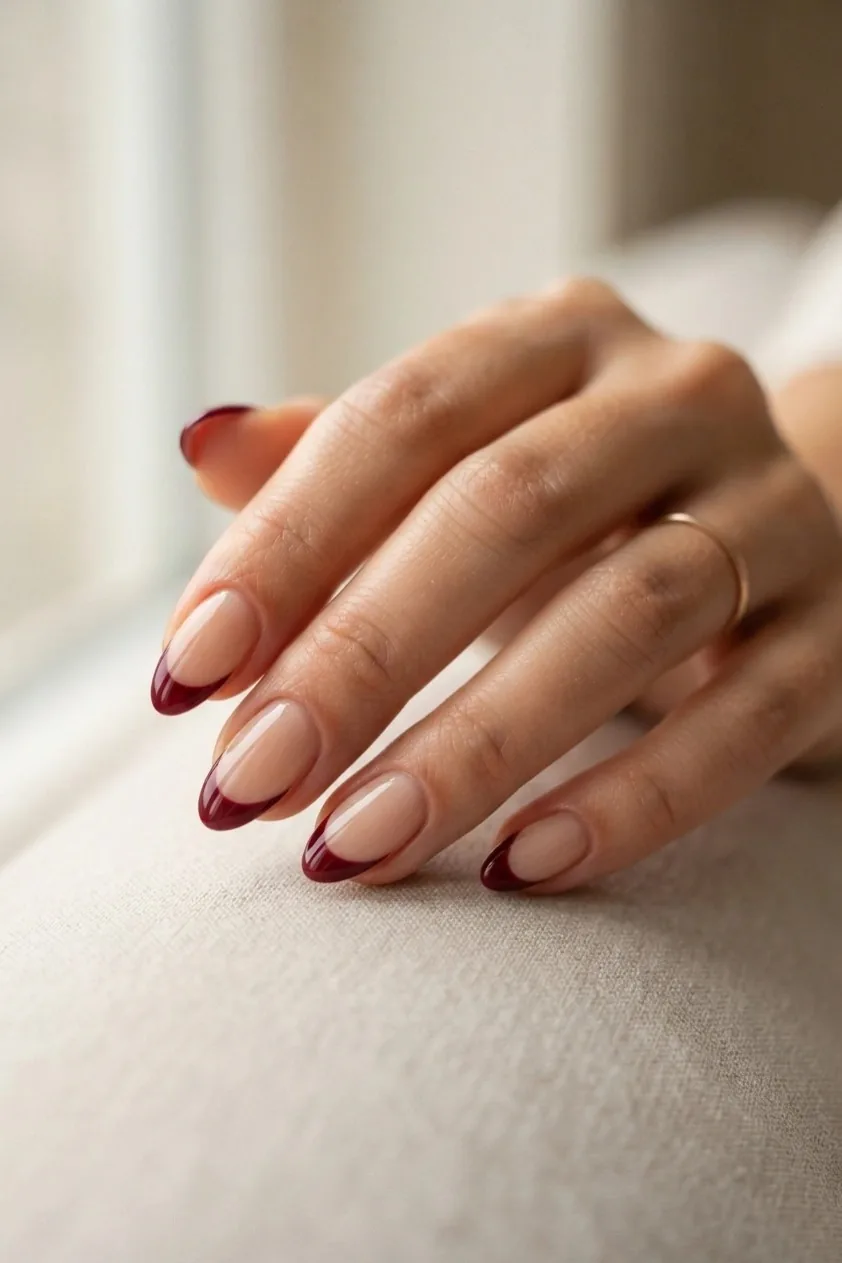
3 Burgundy French tip
A wine tip over a warm nude base. The fall version of the classic, and the easiest way to wear a dark shade if you are not ready for a full dark nail. Keep the tip at roughly a fifth of the visible nail or it starts to shorten the hand.
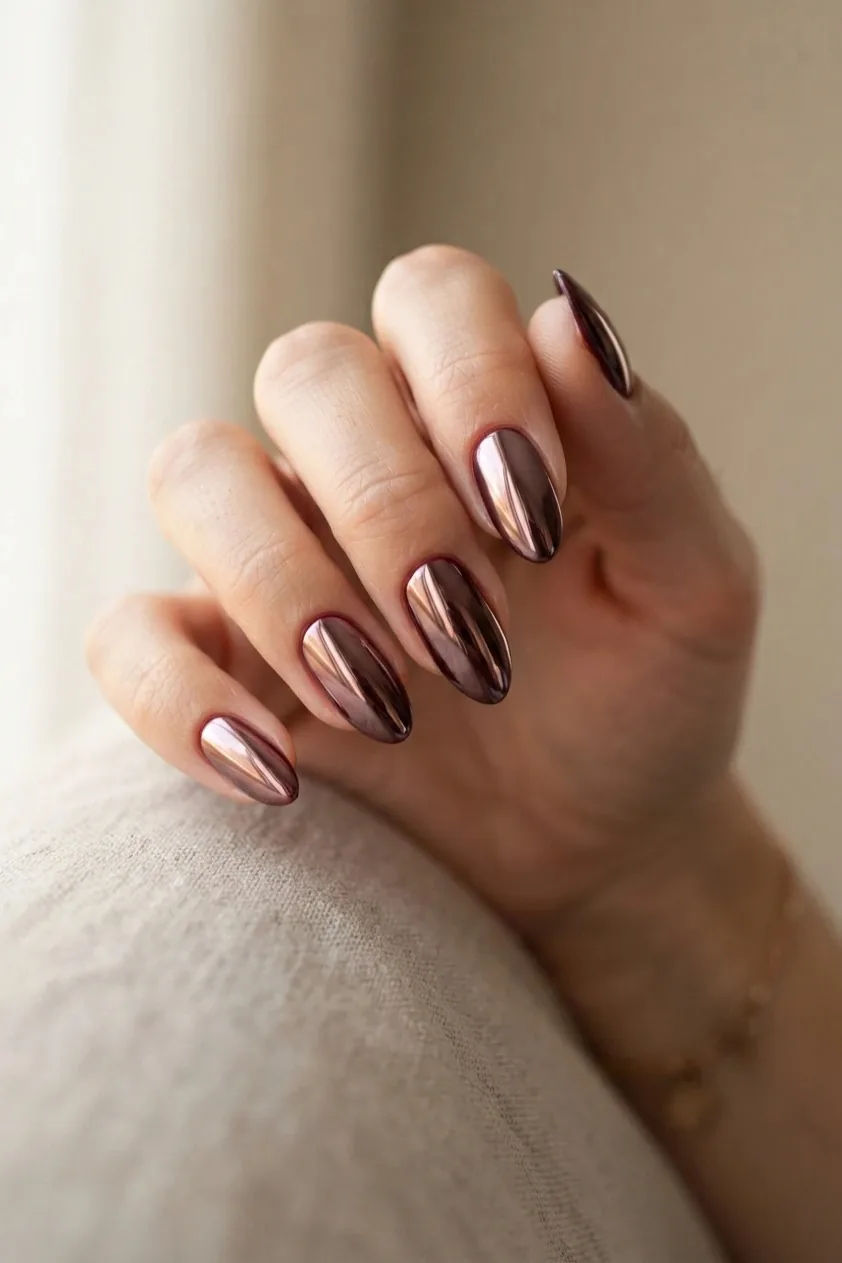
4 Burgundy chrome
Chrome powder buffed over a cured burgundy gel base. The mirror finish pulls the shade towards a metallic rose brown rather than keeping it red. Chrome needs a gel base to bond to, so this one is not doable with regular polish.
5 Sheer burgundy wash
One thin coat of wine over bare nail, left deliberately transparent. Reads like a stain rather than a manicure. The great advantage is that it grows out invisibly, so it buys you an extra week before it looks untidy.
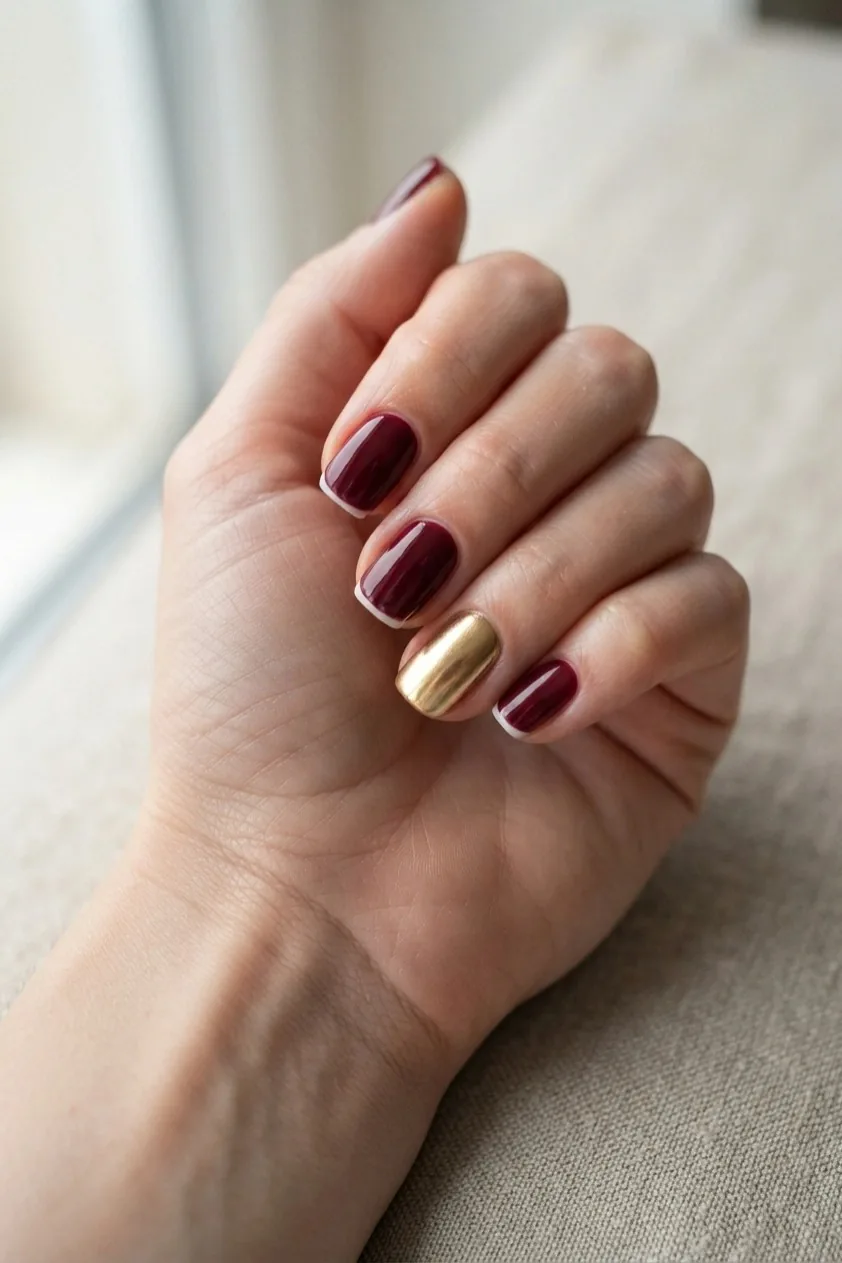
6 Burgundy with a gold accent nail
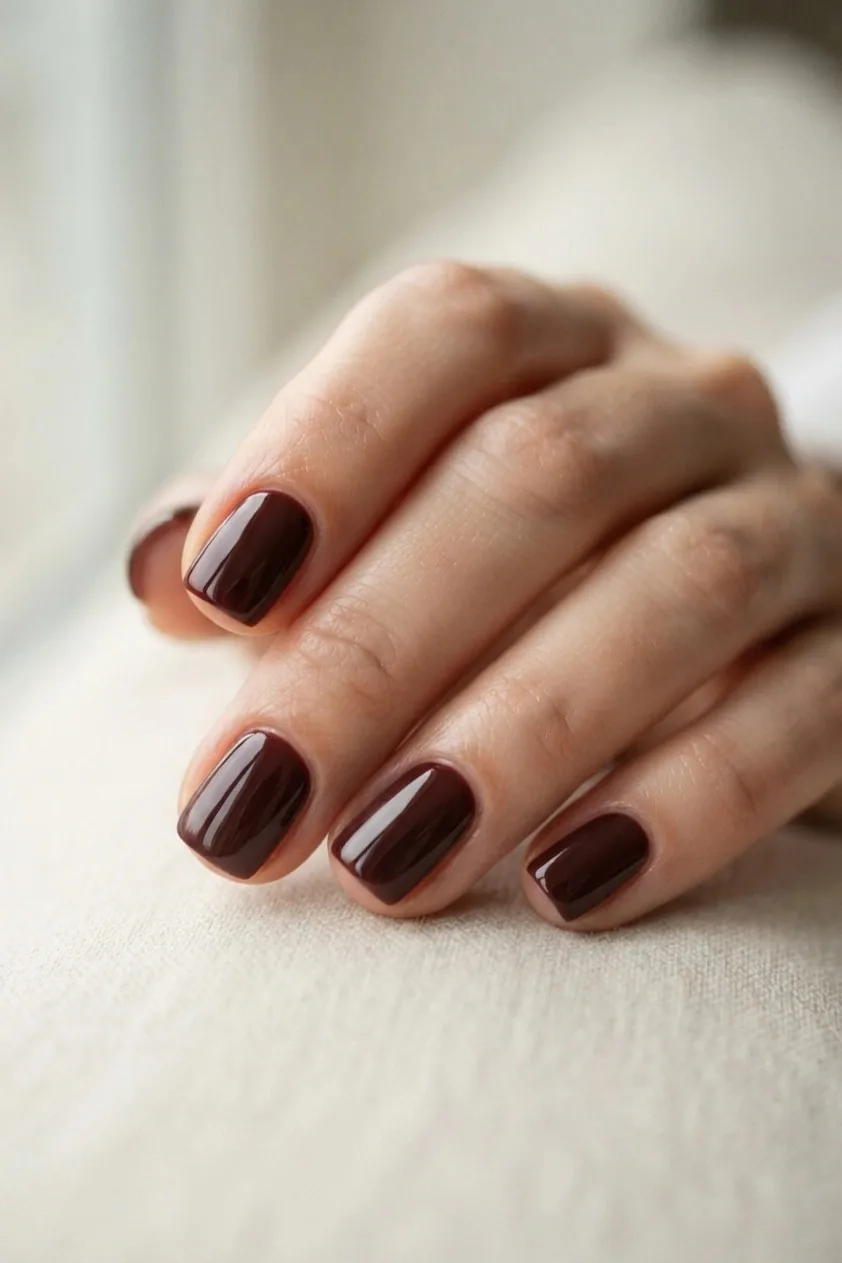
Nine nails in wine, the ring finger in gold foil or metallic gold polish. Gold sits better against burgundy than silver does, because both are warm. Silver against a purple-leaning wine can look cold and slightly clinical.
7 Wine to nude ombre
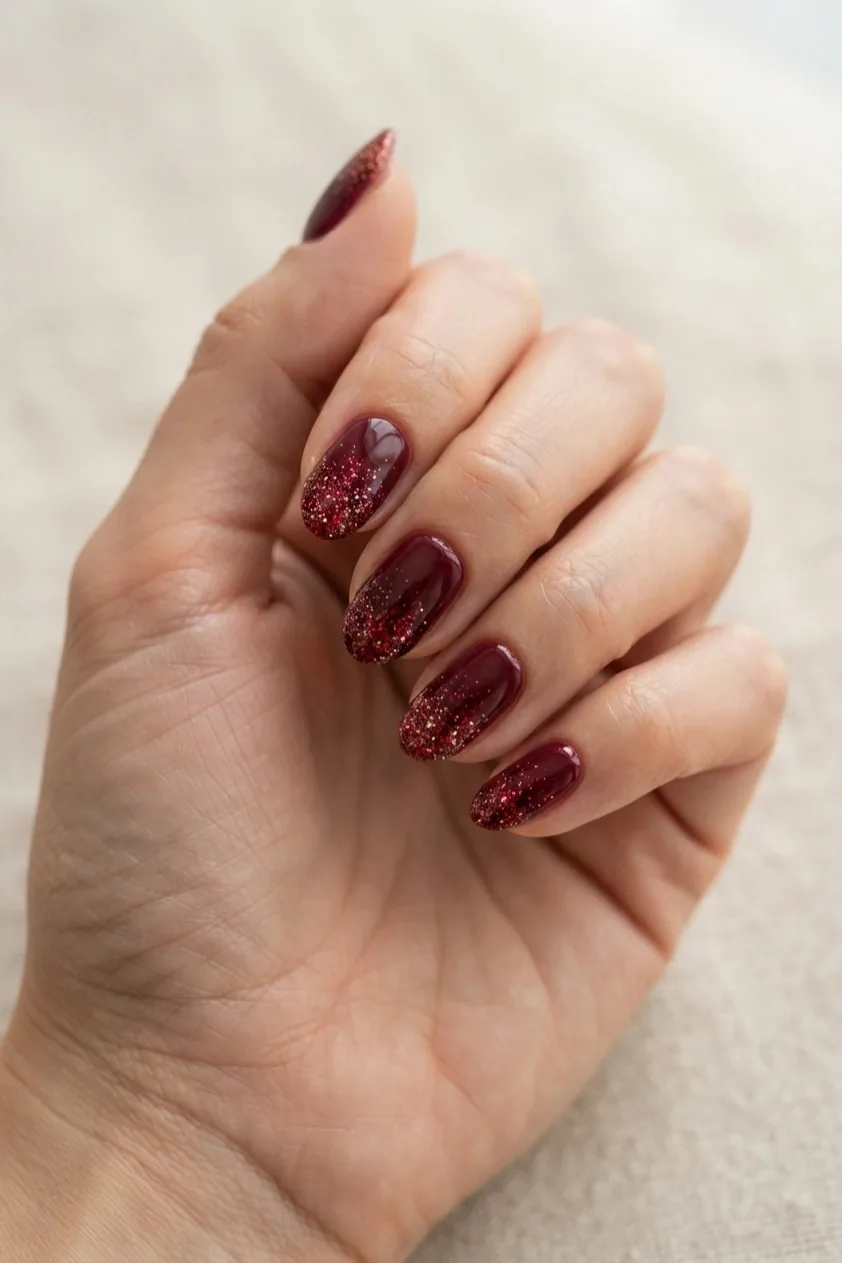
Deep wine at the tip fading up into nude at the cuticle, blended with a sponge. The soft edge means no hard line across the nail, so it lengthens where a French tip shortens. Expect to sponge three or four passes before the transition looks smooth.
8 Burgundy velvet
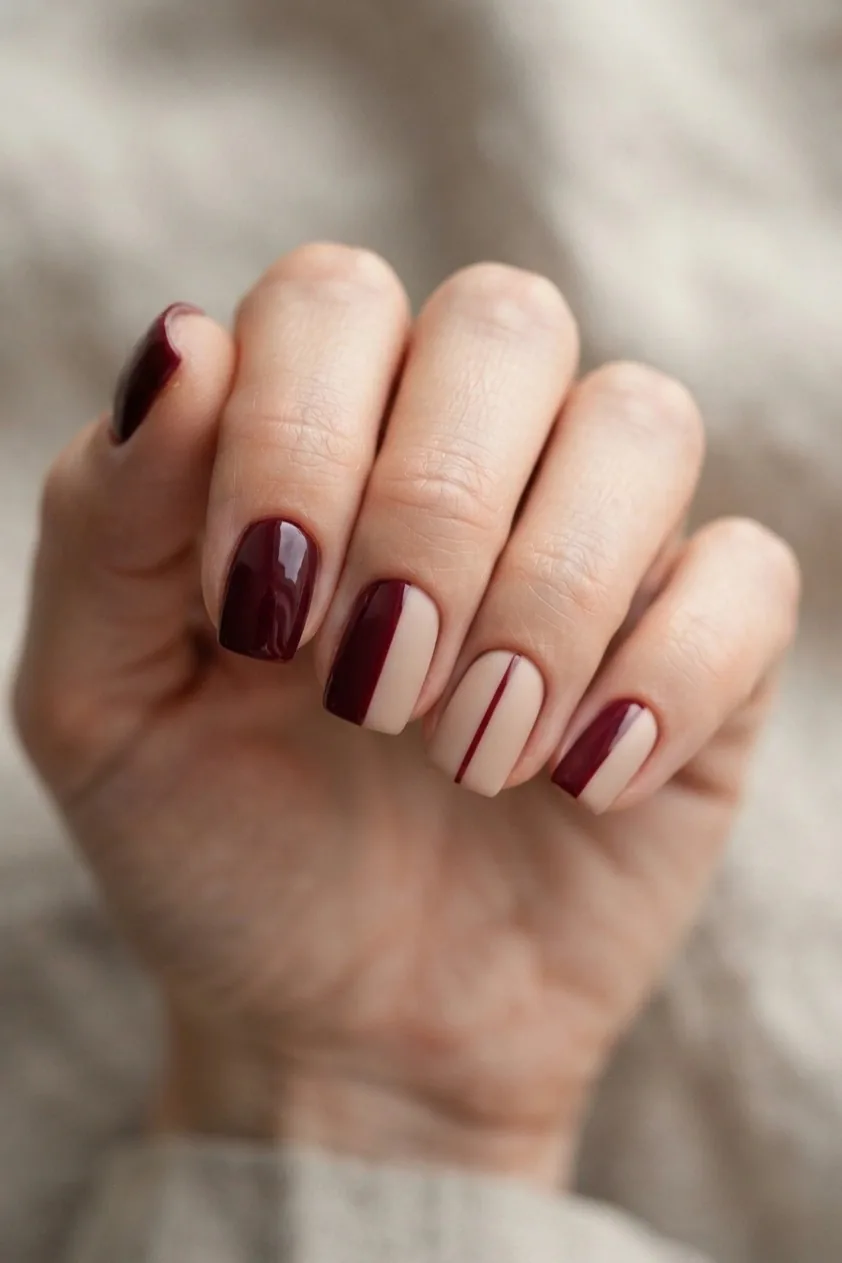
A magnetic gel that pulls a soft band of light through the middle of the nail, so the shade looks like crushed velvet. The magnet is held over the wet gel for about ten seconds per nail before curing, and the angle you hold it at decides where the light band sits.
9 Glazed burgundy pearl
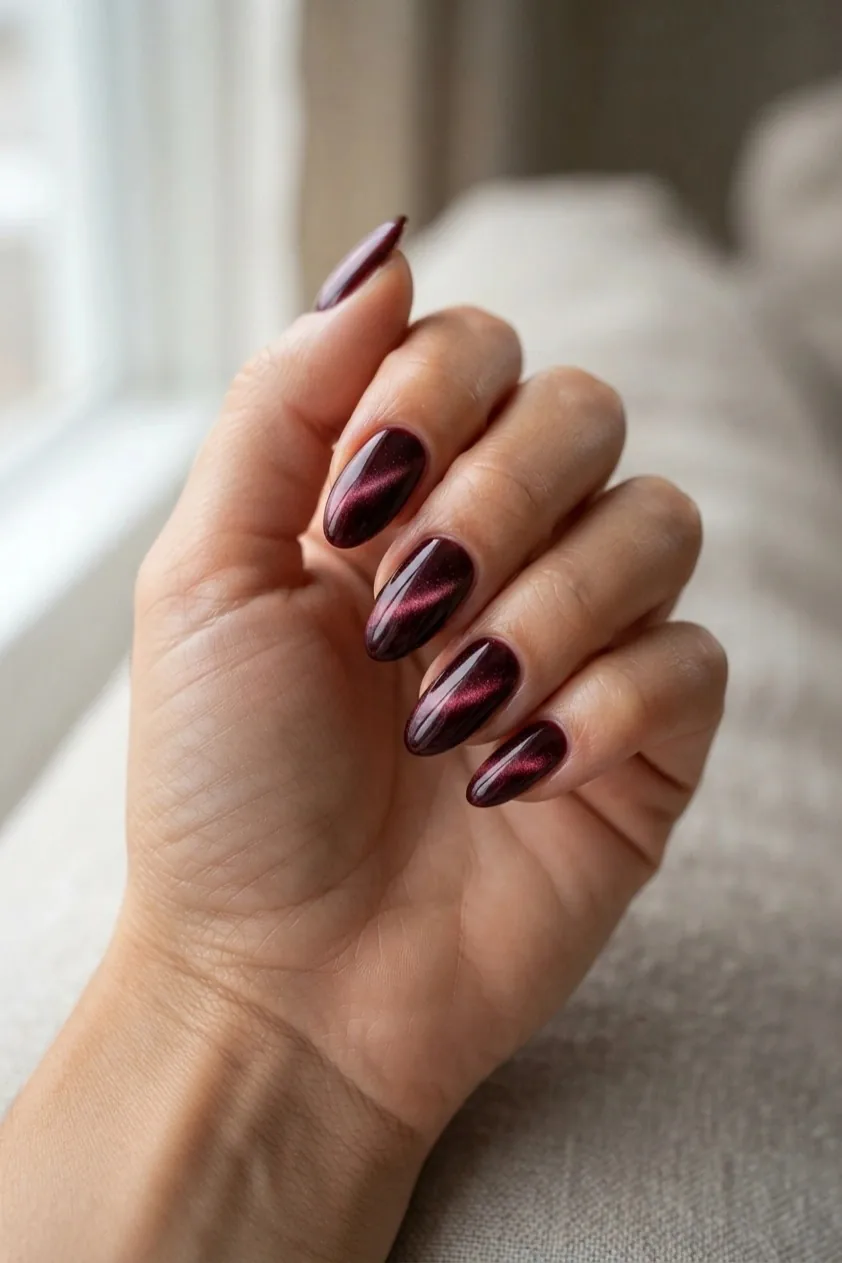
A fine pearl or opal powder buffed lightly over wine so the color shows through a milky sheen. Softer and less mirror-like than chrome. Use a light hand with the powder, because too much kills the burgundy underneath entirely.
10 Burgundy with a black micro French
Full wine nail with a hairline of black outlining the free edge. Almost invisible at arm length and very sharp up close. The line is easier to place if you paint it after the top coat has cured, so mistakes wipe away without ruining the color underneath.
11 Burgundy and nude half and half
The nail divided down the middle lengthways, wine one side and nude the other. A vertical split lengthens the nail. The same design divided horizontally would do the opposite, which is the whole reason to run it this way.
12 Burgundy glitter tips
Solid wine with a dense band of red and gold glitter concentrated at the free edge, fading out towards the middle. Build the glitter in two light passes rather than one heavy one, or the edge sets into a ridge you can feel.
13 Oxblood on short square
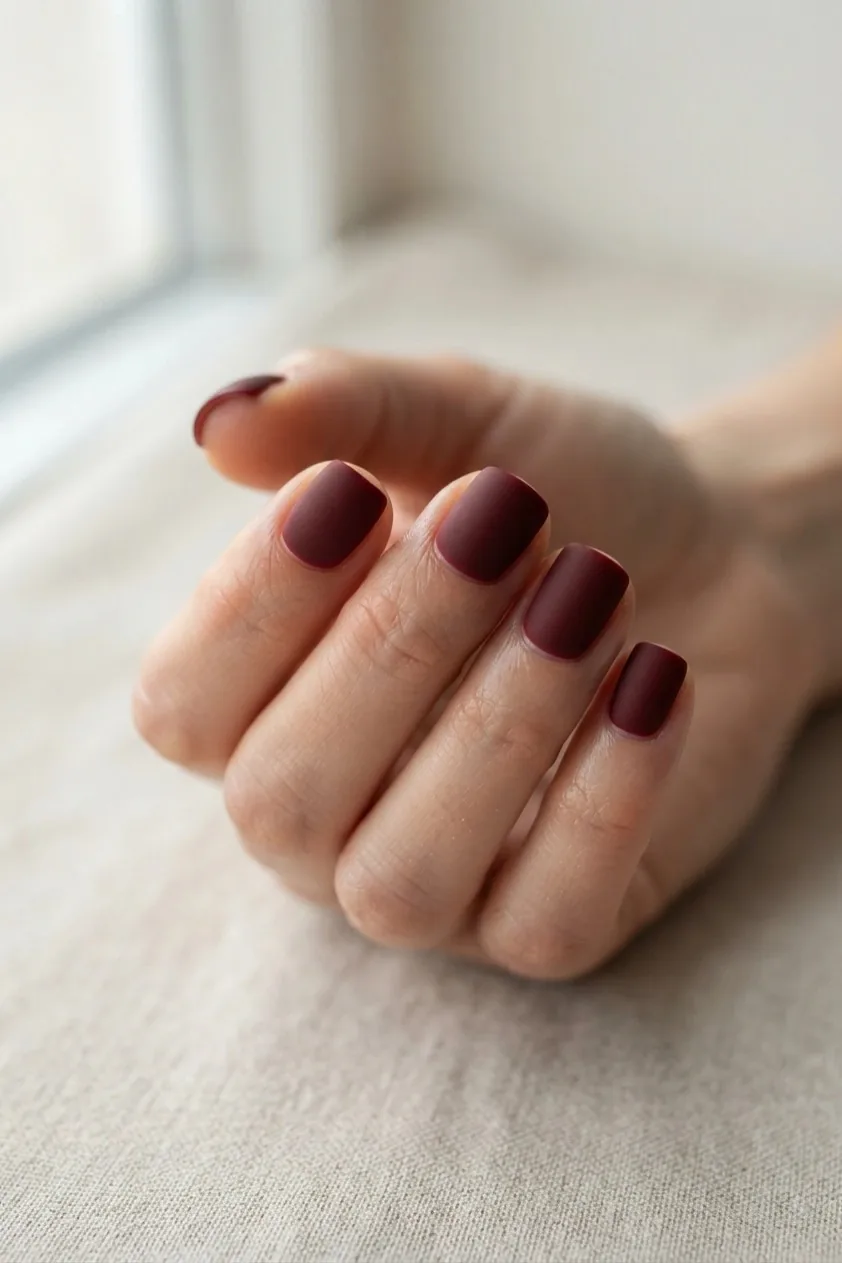
The deepest brown red on a short, flat, well-filed square. Short square is the shape that holds a solid dark color most cleanly, because there is no taper for the polish to pool against. Keep the free edge filed straight or the color exposes every wobble.
14 Burgundy jelly
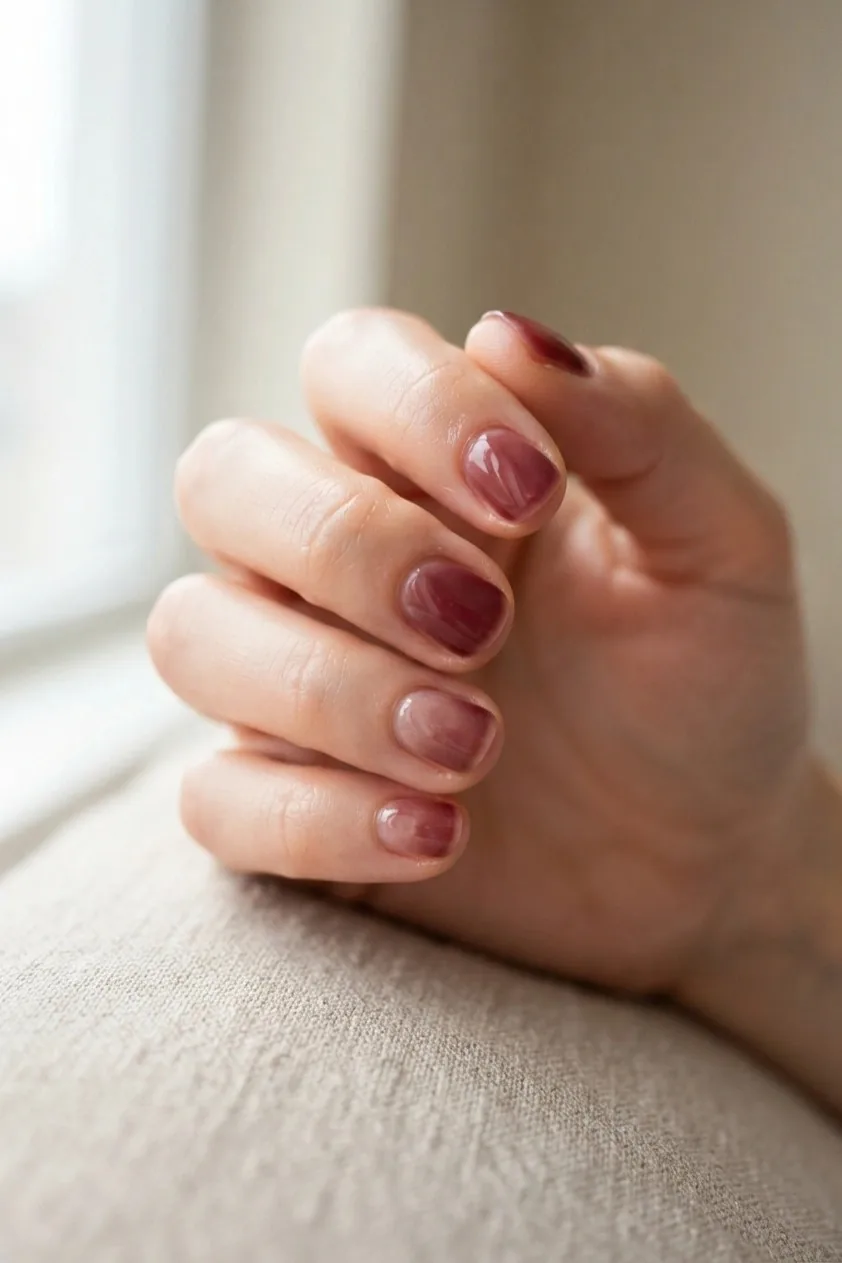
Three sheer coats built up so the color has depth but you can still see light through it. Jelly finishes look wet in a way opaque cremes never do. Because each coat is thin, this dries faster than a two-coat opaque despite the extra layer.
15 Wine and cream marble
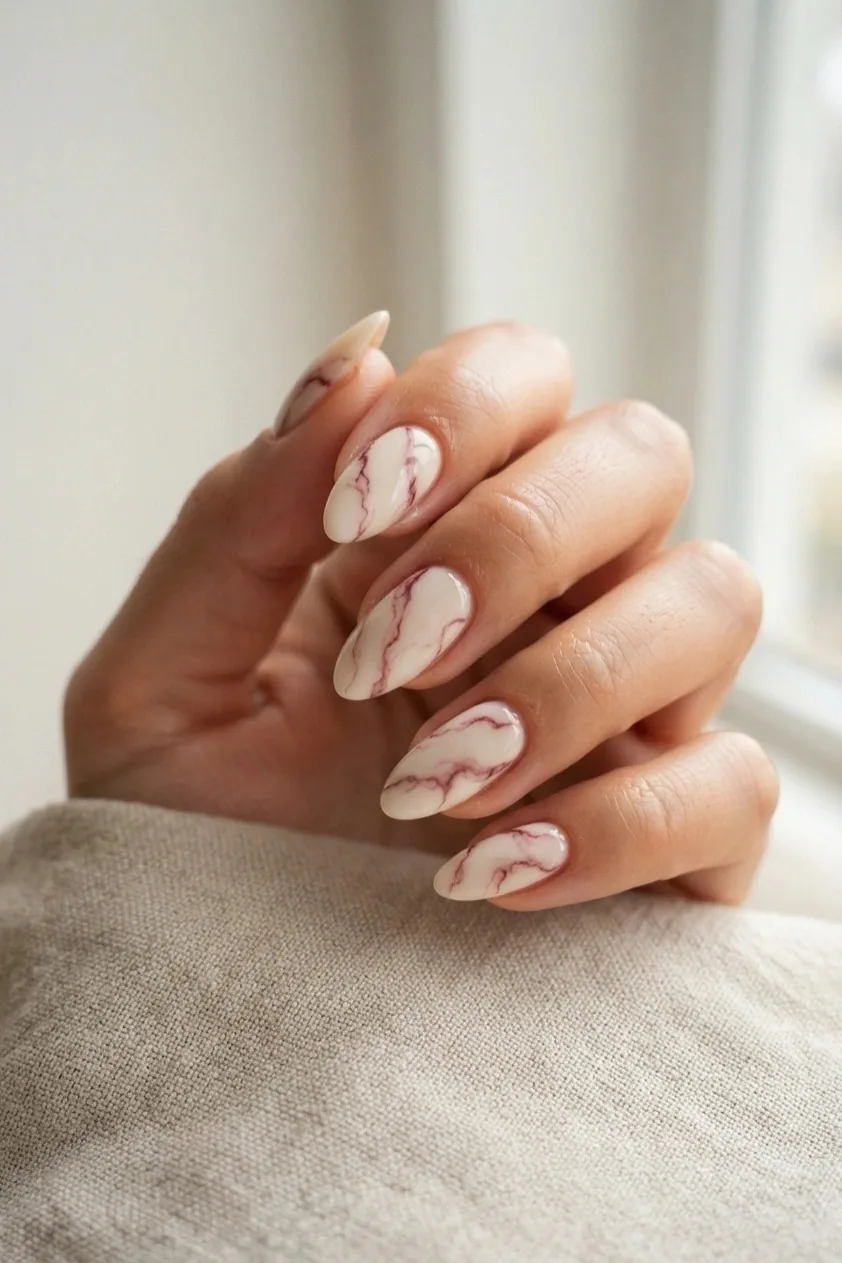
Soft veins of burgundy drifting through a cream base. Work while the base is still tacky rather than fully dry, so the two colors bleed into each other slightly and the veins lose their hard edges.
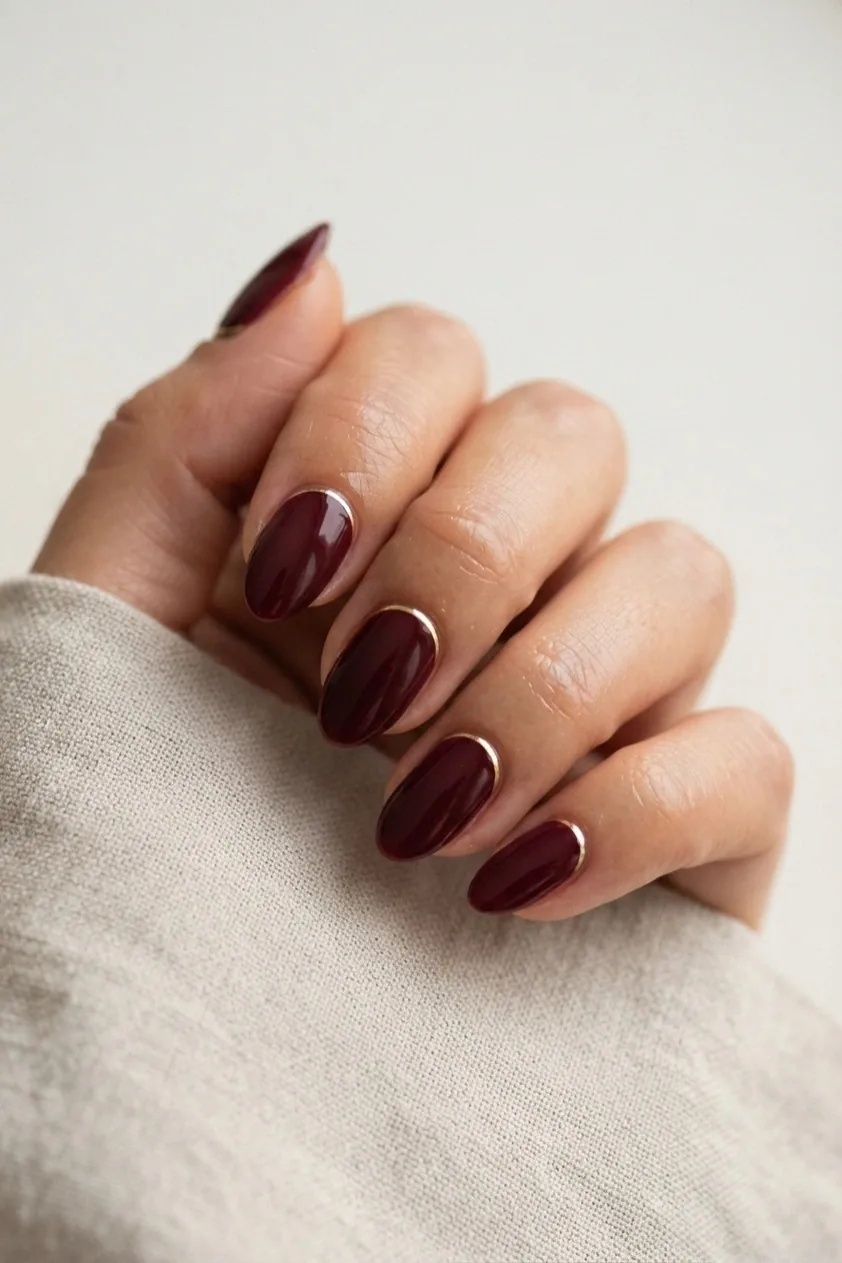
16 Burgundy with a gold cuticle line
A fine arc of gold following the curve of the cuticle on an otherwise plain wine nail. Reverse detail like this draws the eye to the base of the nail, which makes the nail bed look longer than tip detail does.
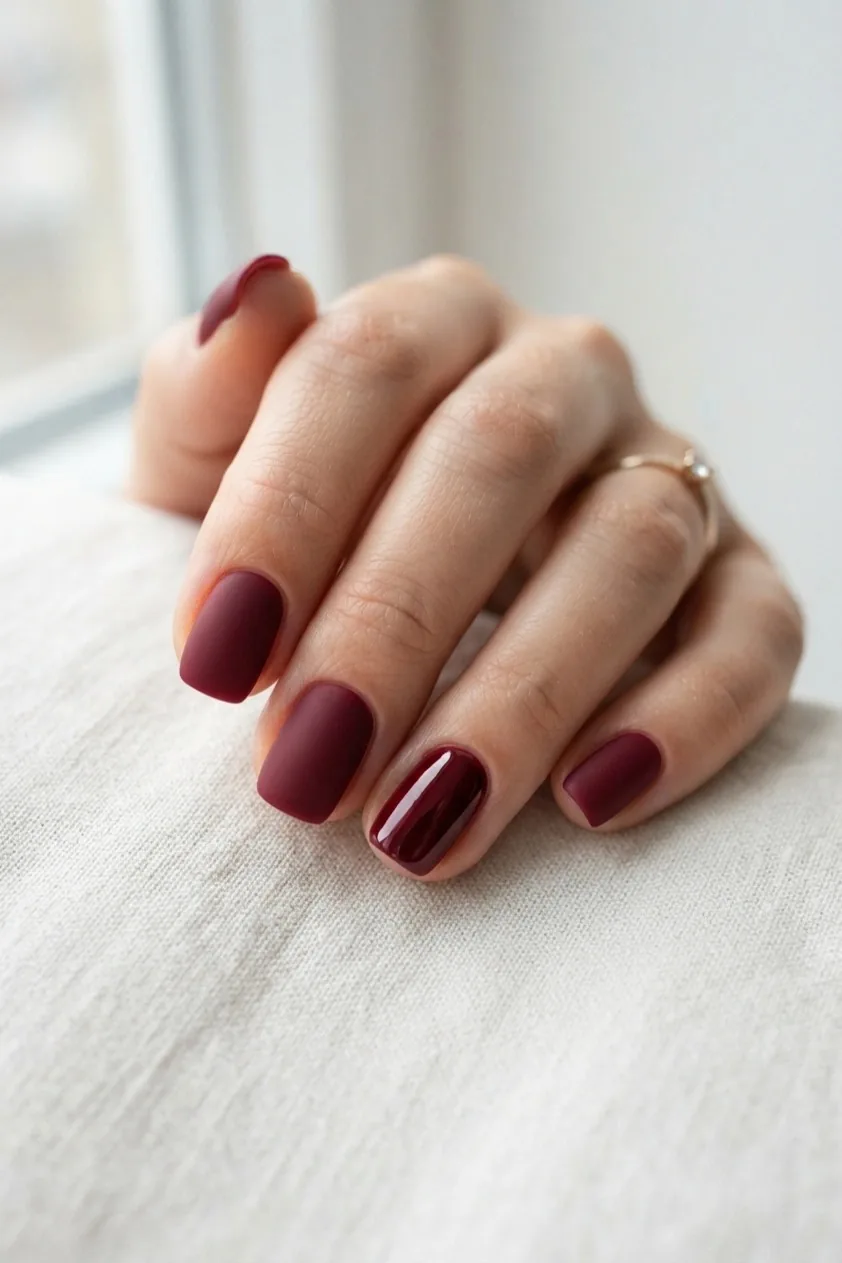
17 Matte burgundy with one gloss nail
Same shade on every nail, matte top coat on four and gloss on the accent. The contrast is only in the finish, which makes it one of the few accent nail ideas that still looks restrained. Costs nothing beyond a second top coat.
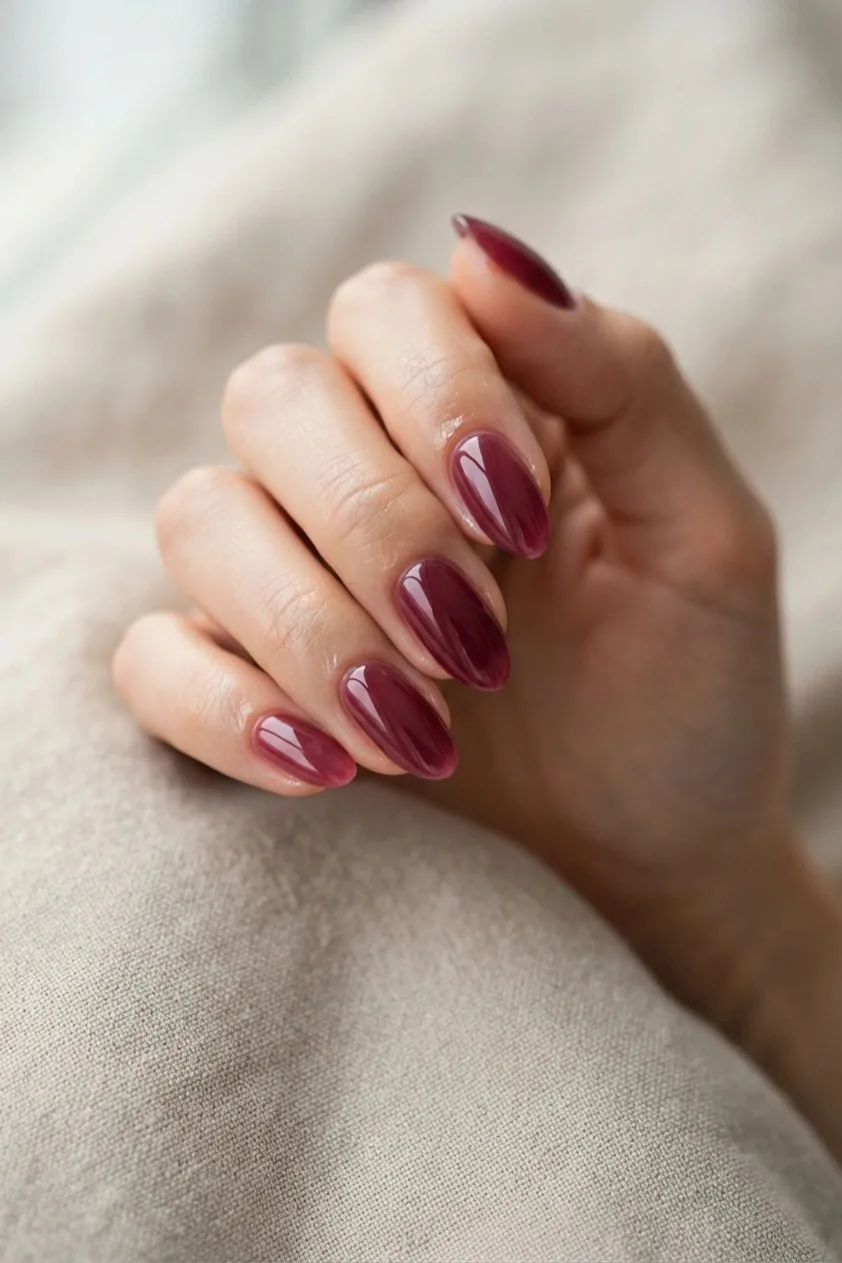
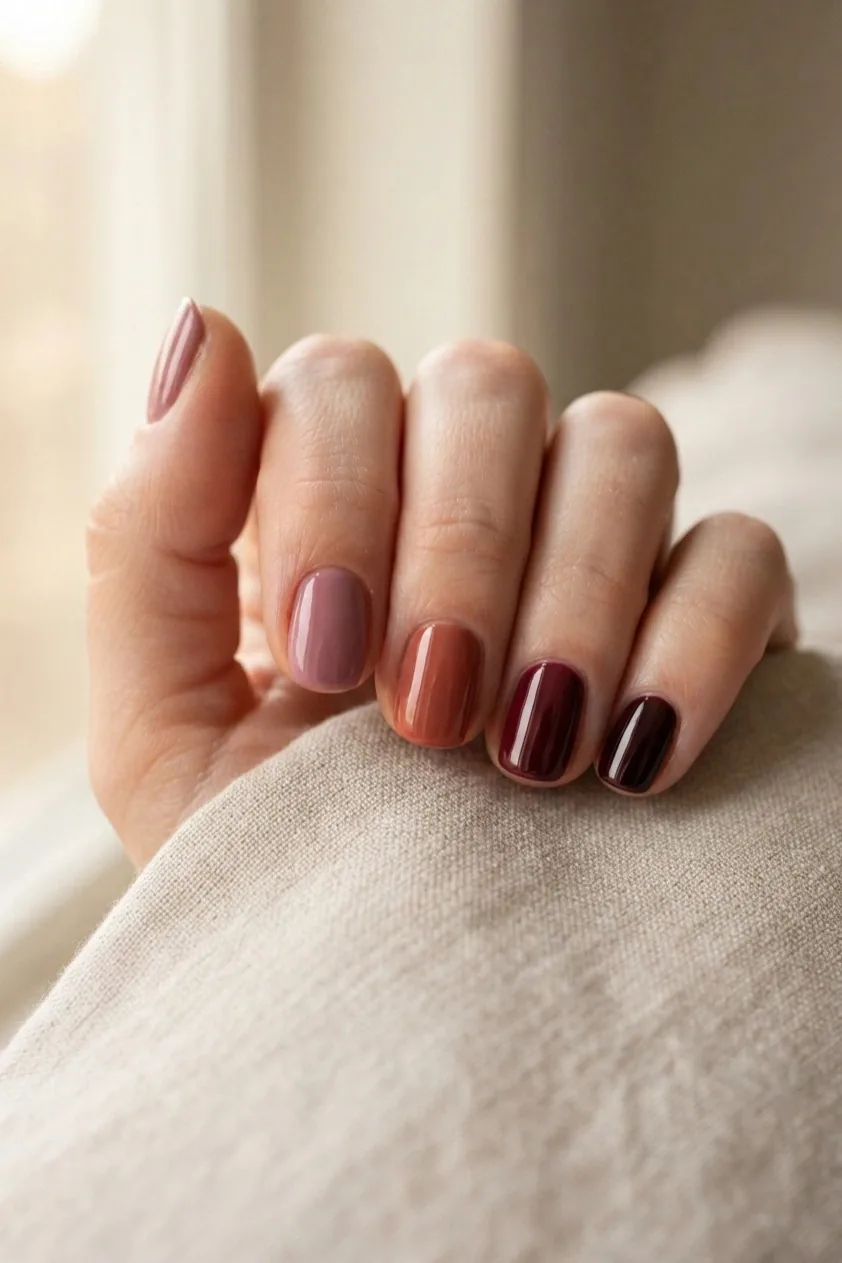
18 Burgundy skittle gradient
Five nails moving from a light dusty rose on the thumb through to near-black oxblood on the little finger. Works best with shades from the same family rather than five unrelated colors, so the hand still reads as one manicure.
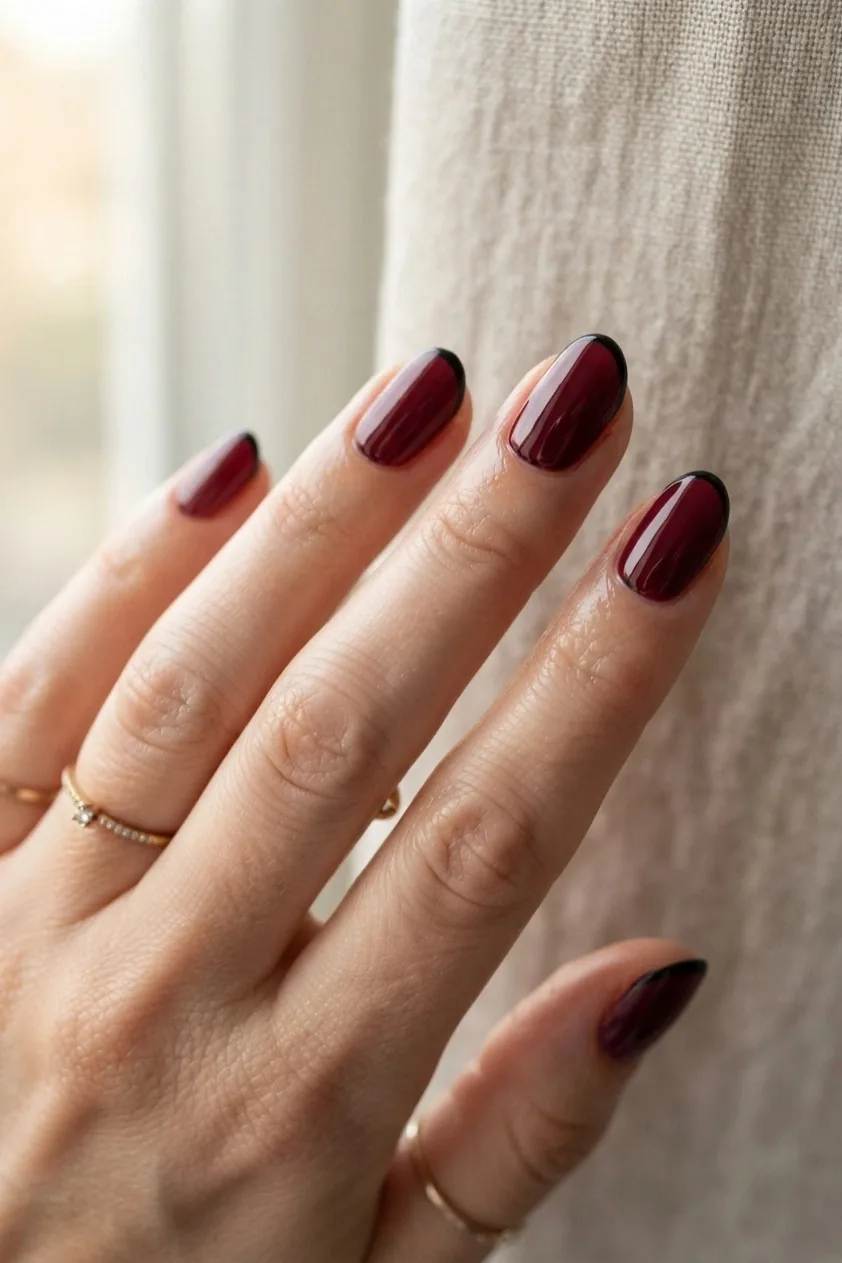
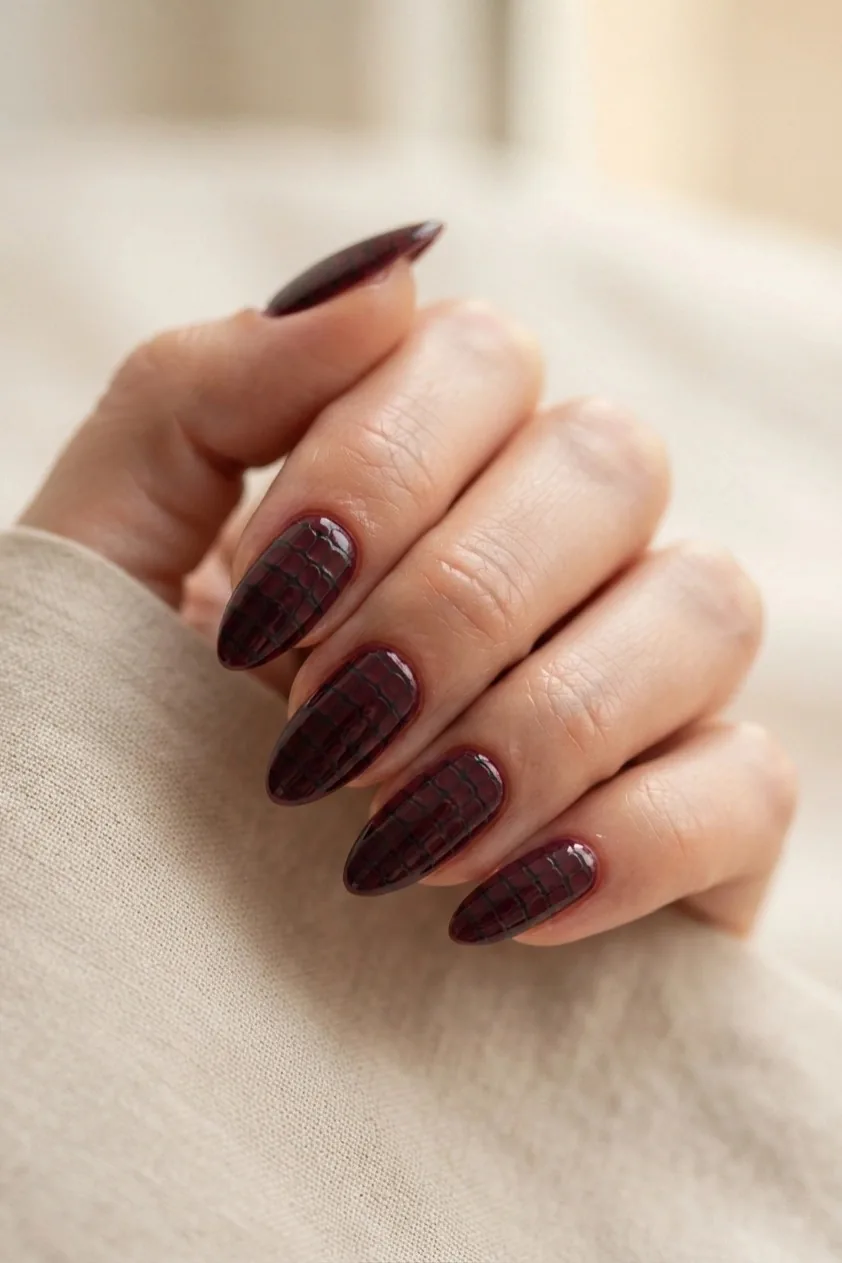
19 Burgundy croc print
A faint tonal scale pattern stamped or sponged over a wine base in a slightly darker shade of the same color. Keeping the pattern tonal rather than contrasting is what stops it looking like a novelty nail.
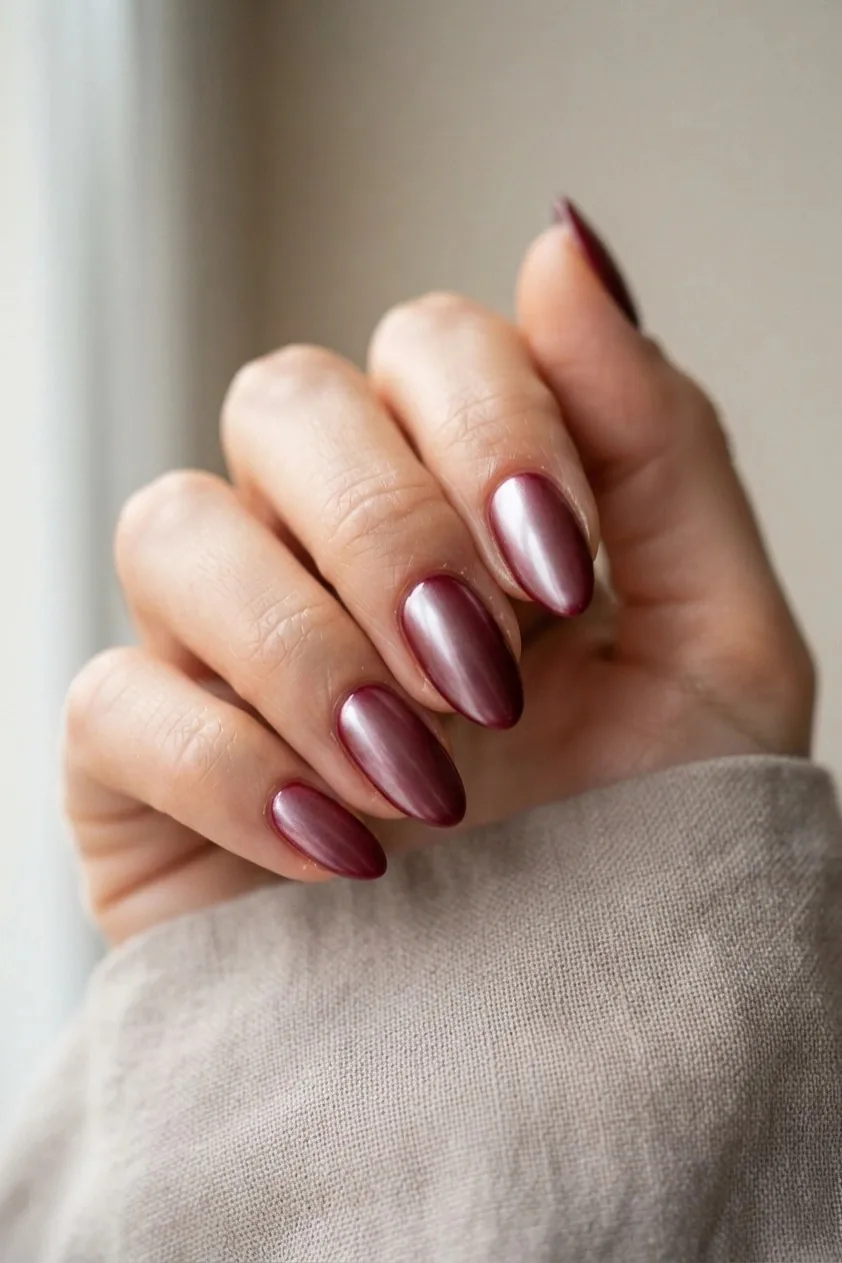
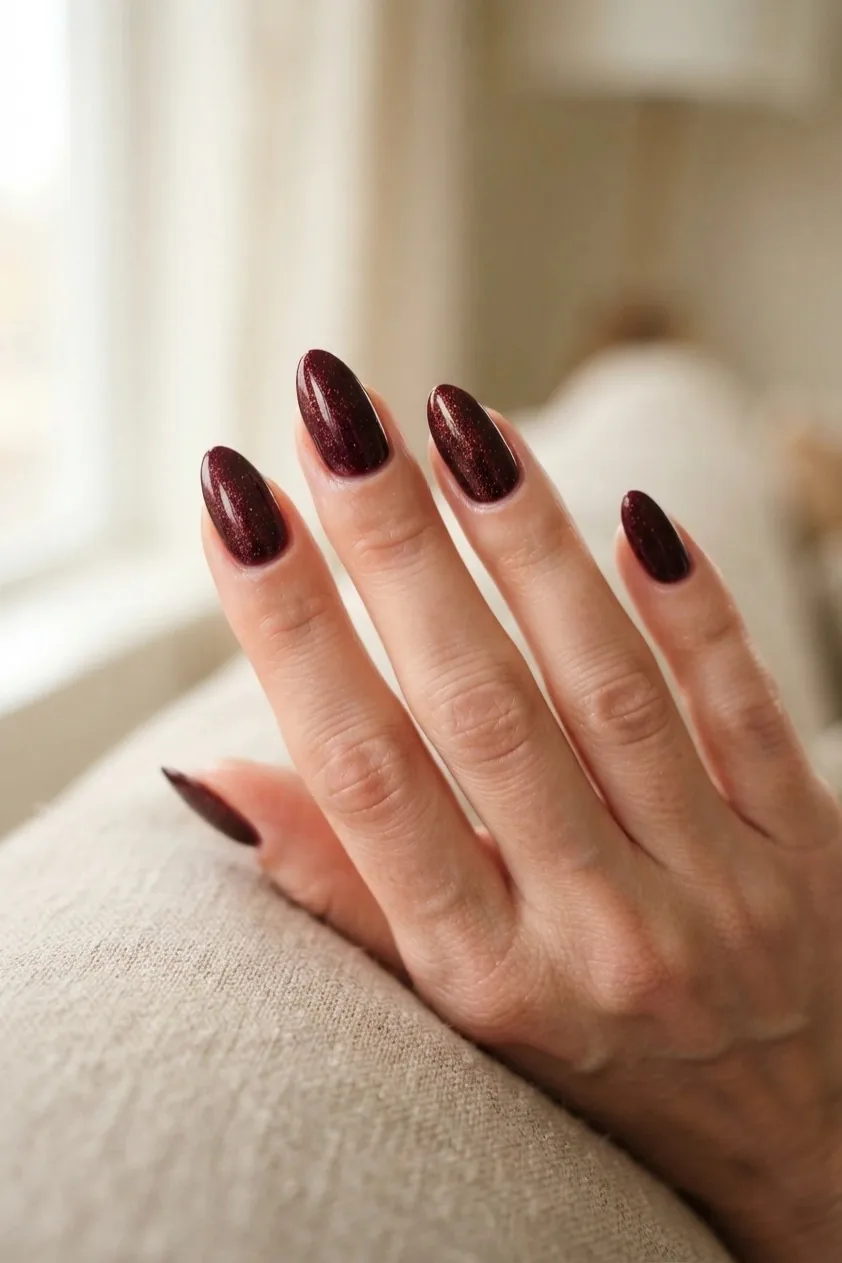
20 Wine with copper flecks
A burgundy base with fine copper shimmer suspended in the top coat, so the metal only catches in direct light. Subtler than glitter and much easier to remove, since the shimmer sits in the top layer rather than through the color.
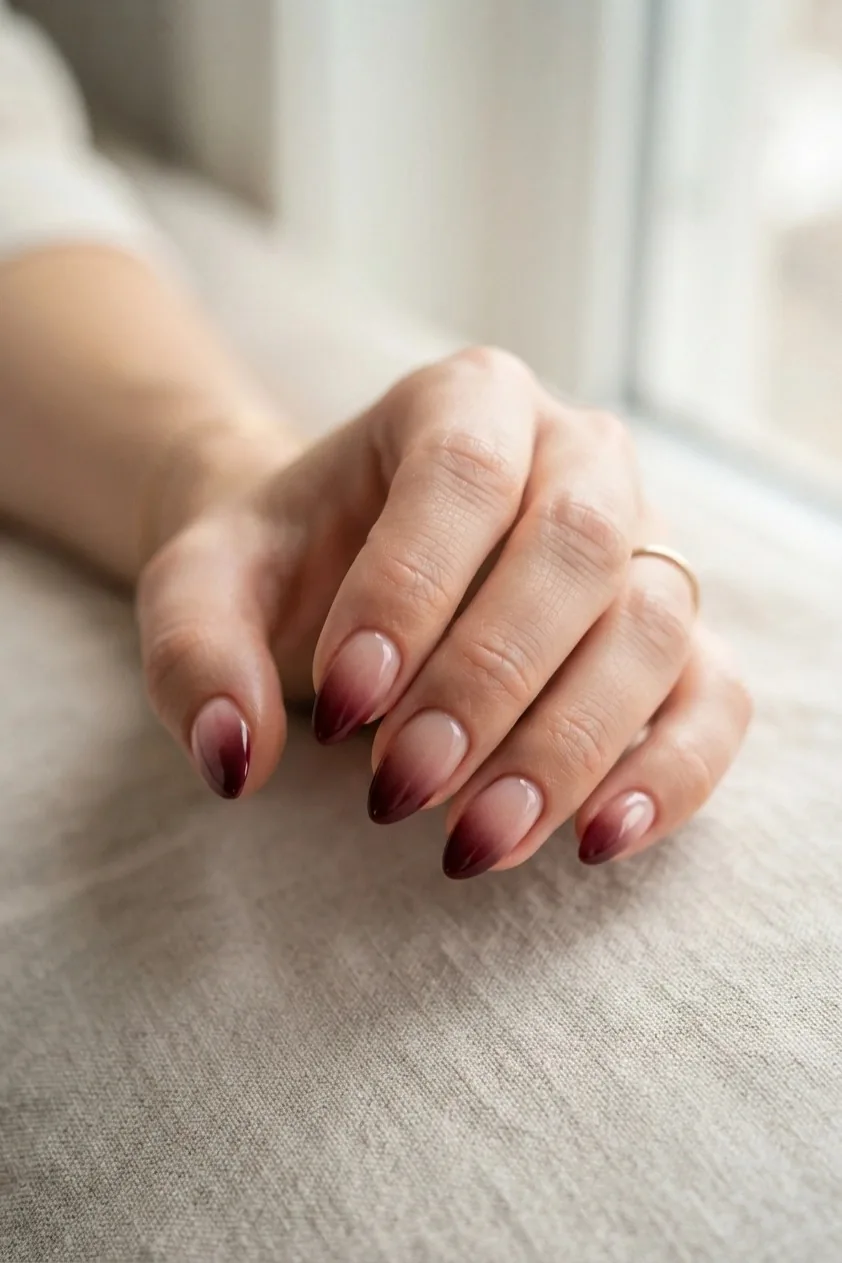
21 Burgundy with bare side walls
Wine applied with a deliberate hairline of natural nail left down each side. The single most effective way to wear a very dark shade on a short or wide nail, because narrower color reads as a longer, slimmer nail.
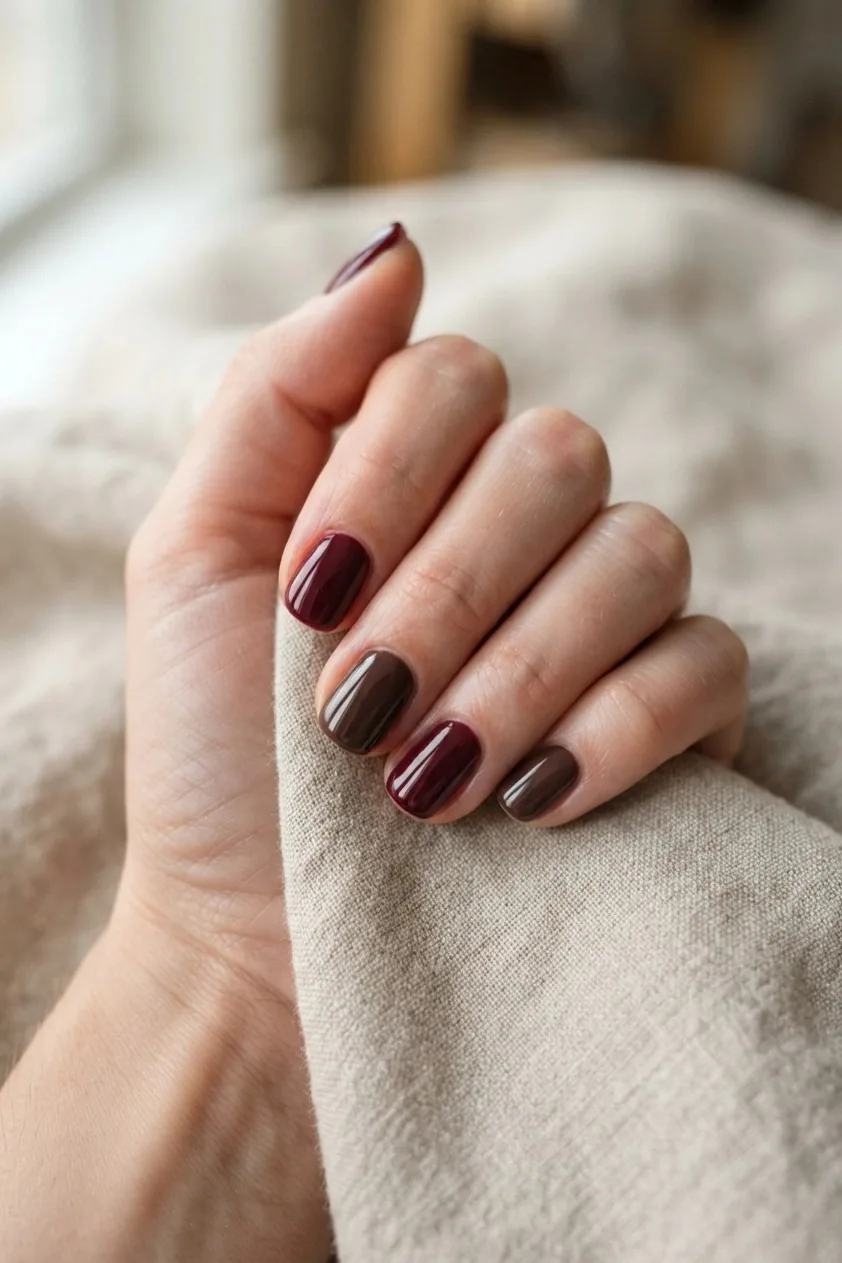
22 Burgundy and chocolate color block
Alternating nails in wine and chocolate brown, with no pattern on either. The two shades are close enough in depth that the hand reads as one color at a distance and two up close, which is most of the appeal.
How to apply dark polish without the mess
Burgundy shows every mistake that a nude would hide. These six steps are what actually make the difference.
- Base coat first, every time. Dark red pigment stains the nail plate yellow within a few days of contact, and that stain takes weeks to grow out.
- Wipe the brush against the neck of the bottle until it is nearly dry. A loaded brush floods the cuticle, and flooded cuticles are what make dark polish look amateur.
- Start the stroke a millimeter away from the cuticle, not against it. Push the polish gently back towards the skin rather than dragging it forwards.
- Two thin coats, never one thick. A thick coat of dark polish stays soft underneath for hours and dents at the slightest contact.
- Cap the free edge on every coat including top coat. The tip is where dark shades chip first and where the chip is most visible.
- Clean up at the end with a flat brush dipped in remover. Tidying the outline afterwards is far faster than trying to paint perfectly the first time.
Common questions
What is the difference between burgundy, maroon and oxblood?
Burgundy is a wine red with a purple lean. Maroon is browner and slightly duller. Oxblood is the deepest of the three, dark enough to read almost black indoors. Polish brands use the names loosely, so judge the bottle rather than the label.
Does burgundy suit every skin tone?
It is one of the most universally wearable shades in the fall palette, but the lean matters. Cool undertones tend to suit purple-leaning wines, warm undertones suit brown-leaning oxbloods. If you are unsure, a mid burgundy sits comfortably in between.
Why does burgundy stain my nails yellow?
Red pigment sits in the keratin of the nail plate if it touches it directly. A base coat prevents it entirely. If the staining has already happened, it grows out rather than washes off, so wearing a base coat and a lighter shade for a few weeks is the only real fix.
How do I fix a smudge without redoing the whole nail?
Wet a fingertip with remover, smooth it lightly over the dent to soften the surface, let it dry, then float one thin coat of color over the top. This works on cremes. It does not work on shimmer or glitter, where the particles will not settle evenly again.