

Snowflakes are the one winter motif that lasts from the first cold week of December to the end of February. They are not tied to Christmas, so a snowflake set still looks right in the middle of January.
What you will find here
They also look harder to paint than they are. A snowflake is six straight arms and a few dots, and a dotting tool can do all of it. The three-step method is below, followed by 18 designs with difficulty, time, and supplies under each.
What makes a snowflake read at nail size
- Six arms, not eight. Real snowflakes are six-sided. Eight arms read as a star or an asterisk.
- Keep the arms thin. Thick arms blur into a blob when the whole snowflake is a few millimeters across. Thin arms keep the shape crisp.
- Contrast matters more than detail. White on navy or silver on deep blue reads instantly. White on pale pink needs a thin gray outline to show at all.
- Vary the sizes. One large snowflake with two or three small ones looks like falling snow. Snowflakes all the same size look like a printed pattern.
How to paint a snowflake with a dotting tool
You need a small dotting tool, white polish, and a drop of polish on a piece of foil to dip into.
- The arms. Dip the dotting tool, touch it to the point where the center of the snowflake will be, and drag outward in a straight line. Make a vertical arm first, then two diagonal arms crossing it so the six ends sit evenly spaced, like the 12, 2, 4, 6, 8, and 10 on a clock face.
- The branches. With the smallest end of the tool, drag two tiny strokes off each arm about two thirds of the way out, angled back toward the center. These small V shapes are what turn an asterisk into a snowflake.
- The dots. Place a slightly larger dot in the center and a tiny dot at the end of each arm. Dip again for every dot so they stay the same size.
Let the snowflake dry for ten minutes before topcoat, then float the topcoat on without pressing. If the arms keep coming out uneven, practice on a strip of tape stuck to the table first. It usually takes a few tries to find the right pressure.
18 snowflake nail designs
Sorted by time, quickest first.
1 Snowflake water decals
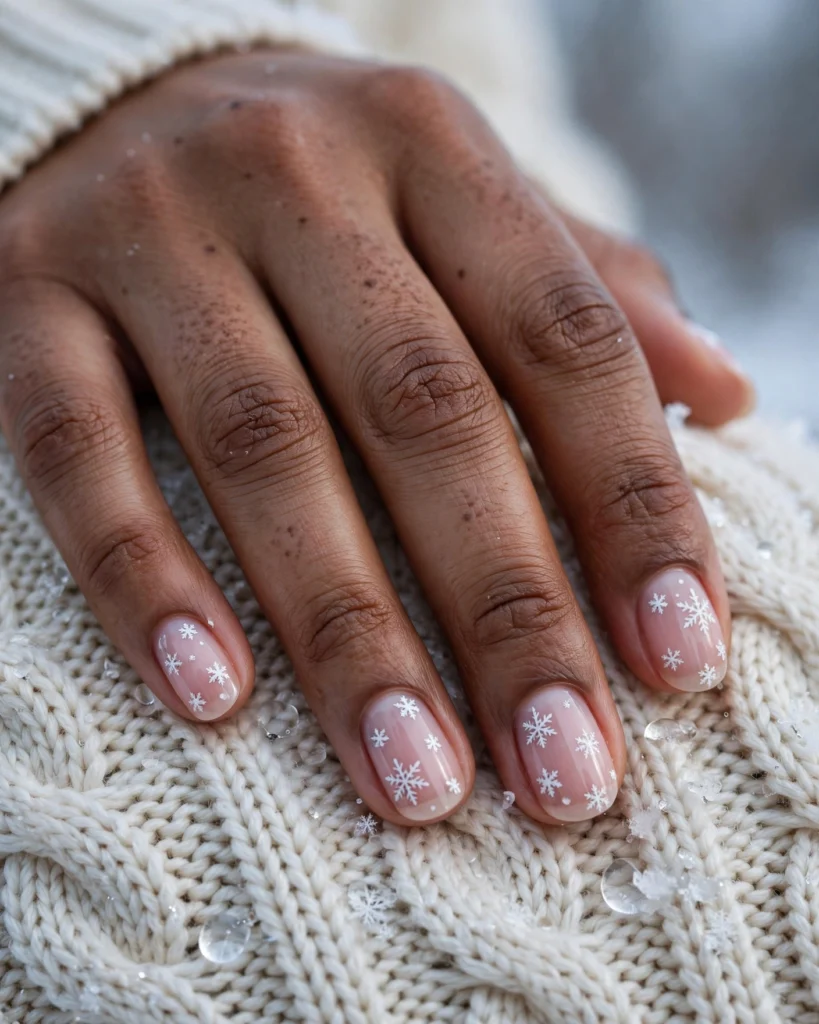
White snowflake water decals on sheer pink, slid onto the nail from a damp backing sheet. Sealed under topcoat, decals look painted and take a fraction of the time, which makes this the fastest design here.
2 Snowfall dots
Navy with white dots in three sizes falling down the nail, and one small snowflake on the ring finger. The dots do most of the work, and the snowflake gives the set a focal point.

3 Dot snowflakes on slate blue
Snowflakes built entirely from dots: a center dot circled by six smaller dots, with no lines at all. The easiest snowflake to paint, and still unmistakably a snowflake.

4 Silver snowflake on icy blue jelly
Sheer icy blue jelly with one silver snowflake on each accent nail. The jelly base looks like ice, and silver reads cooler and sharper than white.

5 Micro snowflakes for short nails
One tiny snowflake, a few millimeters across, near the cuticle of each nail. At this size even three crossed lines with a dot in the middle read as a snowflake, so skip the branches.

6 Snowflake-tipped French
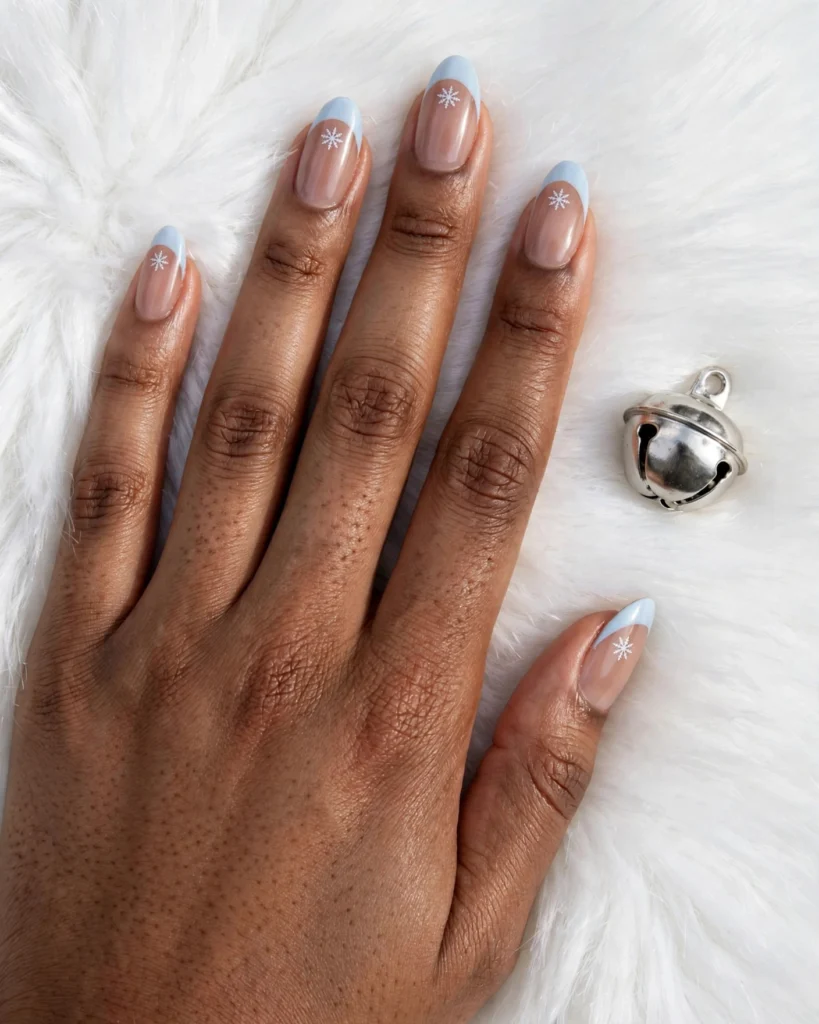
Pale blue French tips with one small white snowflake sitting at the center of each tip line. The snowflake hides the middle of the line, which is where most tips wobble.
7 Matte charcoal with a white snowflake
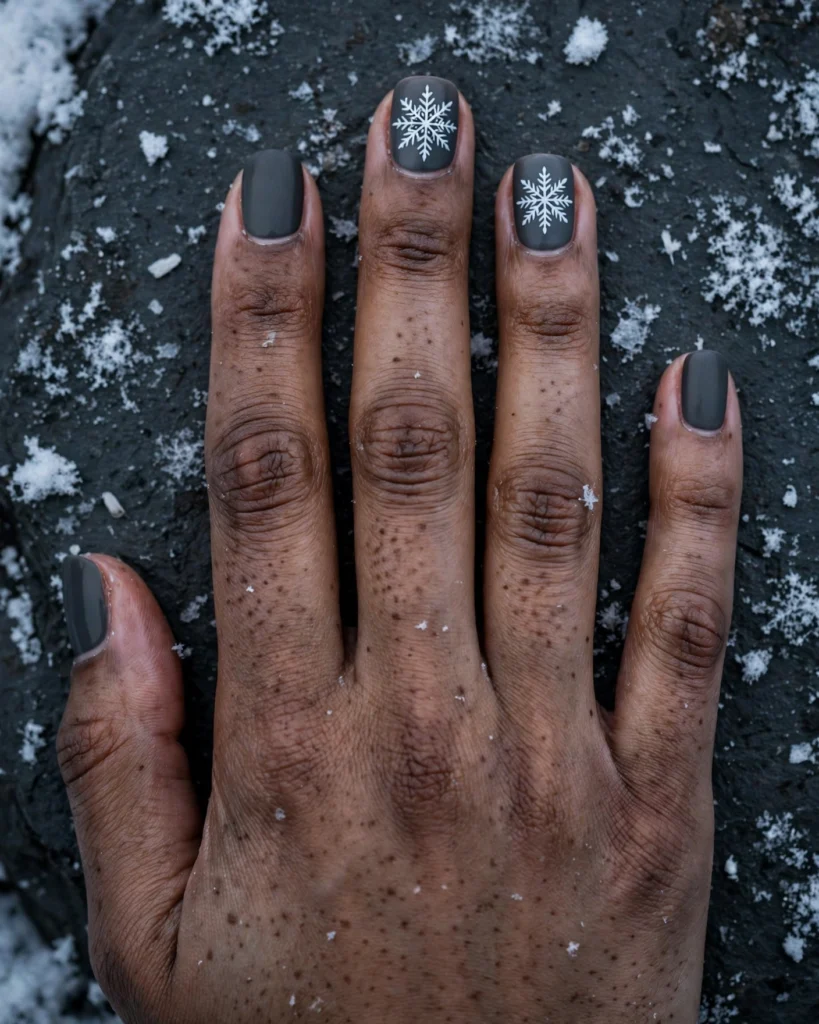
Charcoal gray with one white snowflake on each accent nail, all under a matte topcoat. White stays crisp against the flat gray, and the matte finish looks like winter stone.
8 Burgundy with a gold snowflake
Deep burgundy with a gold snowflake on the ring finger. Warm colors make a snowflake feel cozy rather than icy, and the set carries from Christmas into January.

9 Lilac with white snowflakes
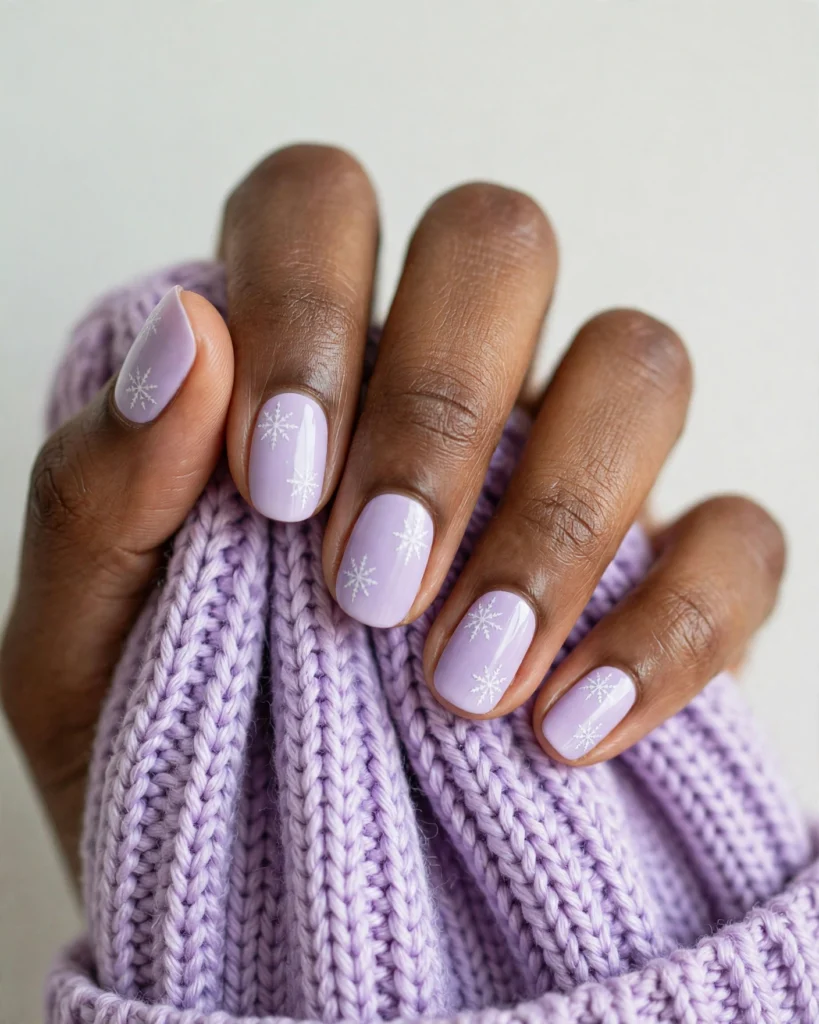
Soft lilac with small white snowflakes on every nail. Pastel and white is the softest snowflake look on this list. Outline each snowflake with a fine gray line so it shows against the pale base.
10 Emerald with a silver snowflake
Deep emerald green with a silver snowflake. A Christmas-leaning color with a winter motif, so the set works on both sides of the holiday.
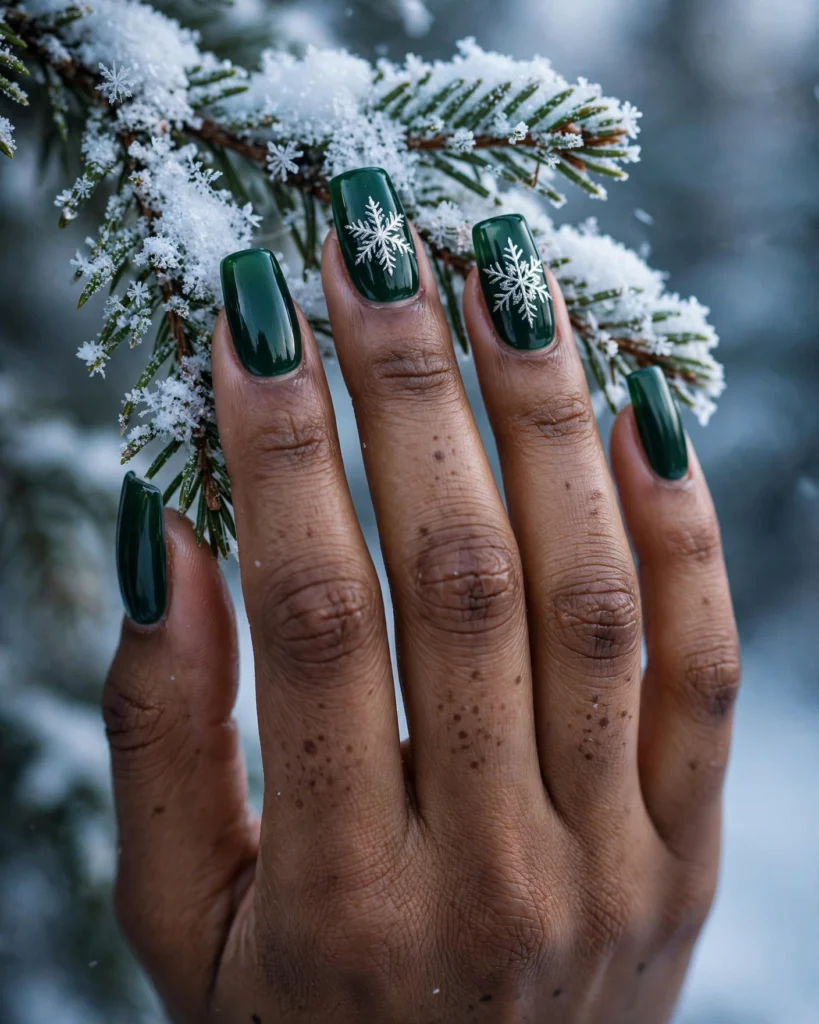
11 Stencil snowflake in negative space
A snowflake left as bare nail inside a blue nail. Press a snowflake vinyl stencil onto a dry base coat, paint over it, and peel the stencil while the polish is still wet.
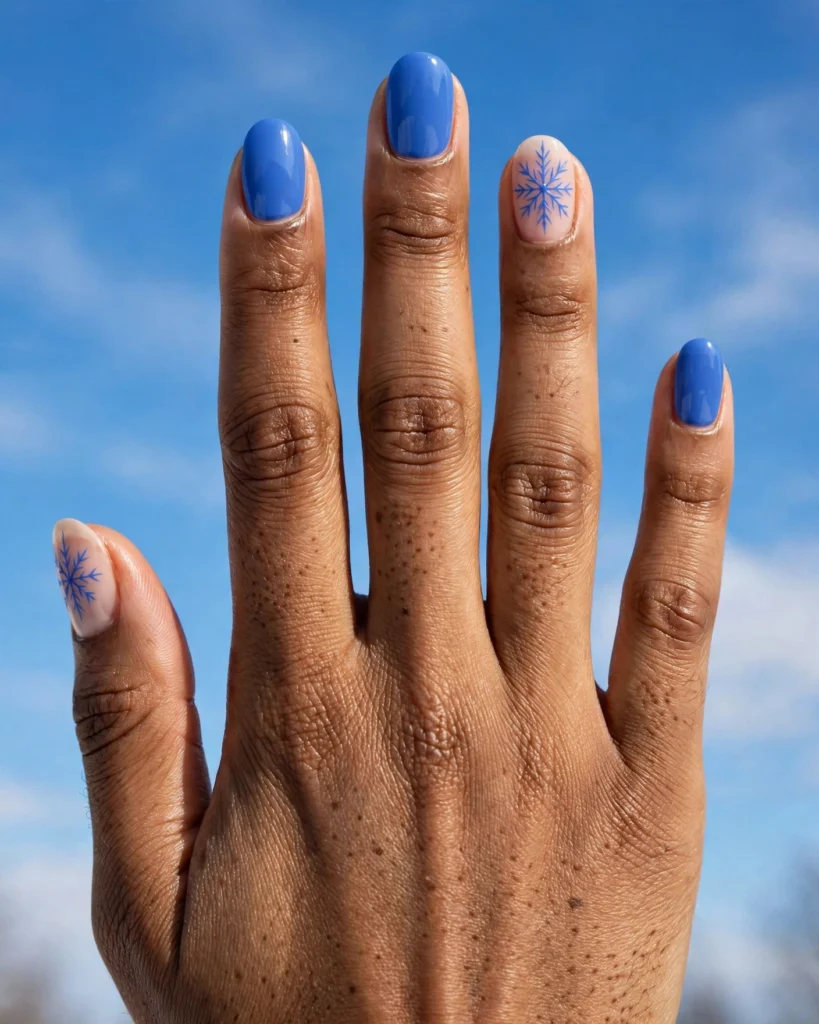
12 Oversized snowflake accent
One large white snowflake filling the accent nail, with its arms running off the edges. Cropping the snowflake makes it look bold and graphic rather than cute.
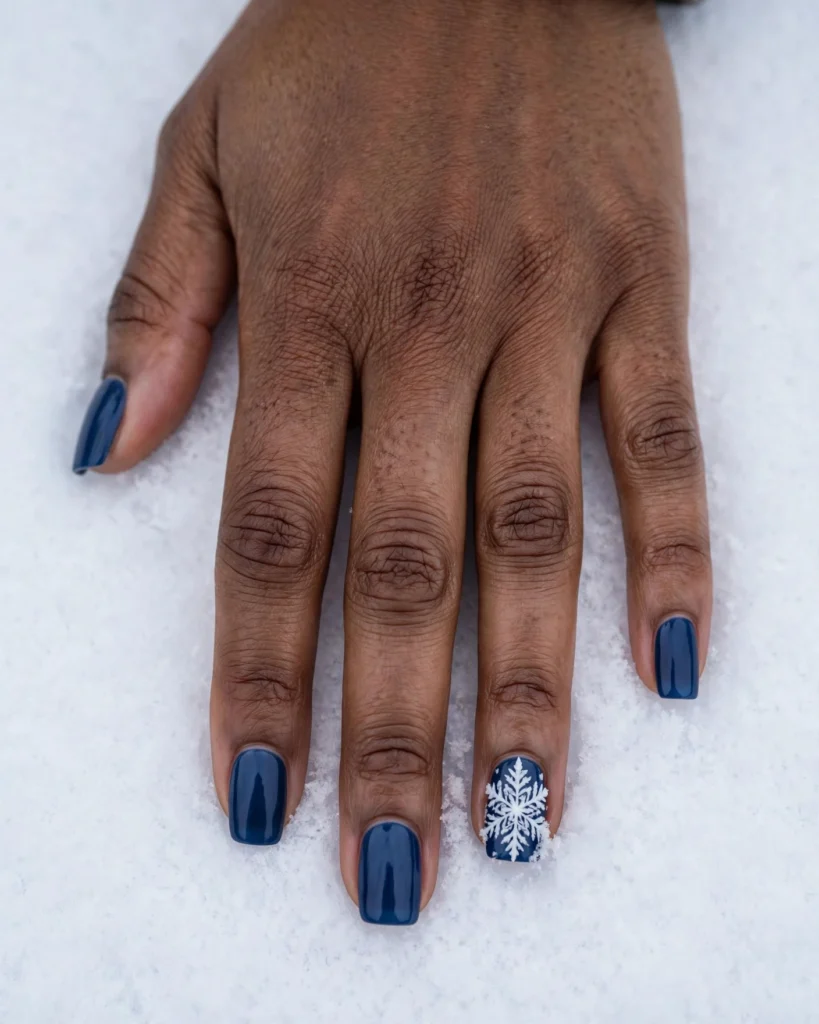
13 Glitter snowflake
A snowflake painted in silver glitter polish over pale blue. Wipe most of the polish off the brush first and paint with a thin, nearly dry brush so the glitter lands in a line.
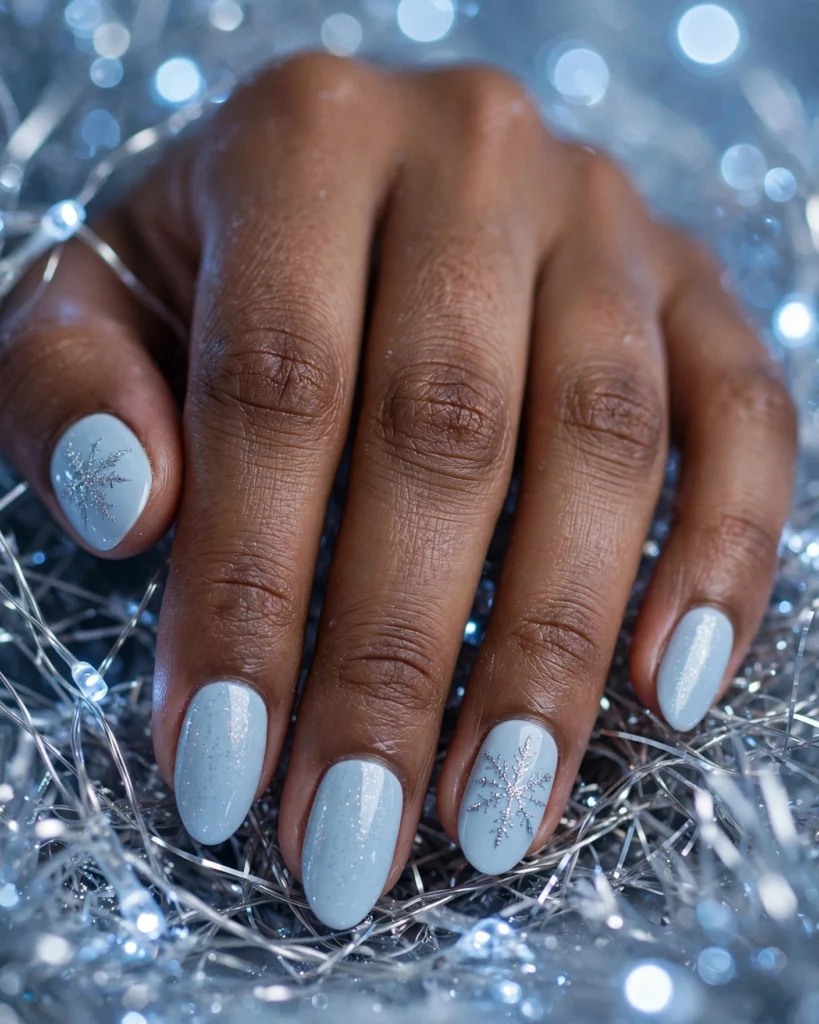
14 Rhinestone-center snowflake
A white snowflake with a tiny clear rhinestone at the center. The stone catches light like ice and covers the point where the arms cross, which is the hardest spot to keep neat.

15 Velvet blue with a snowflake
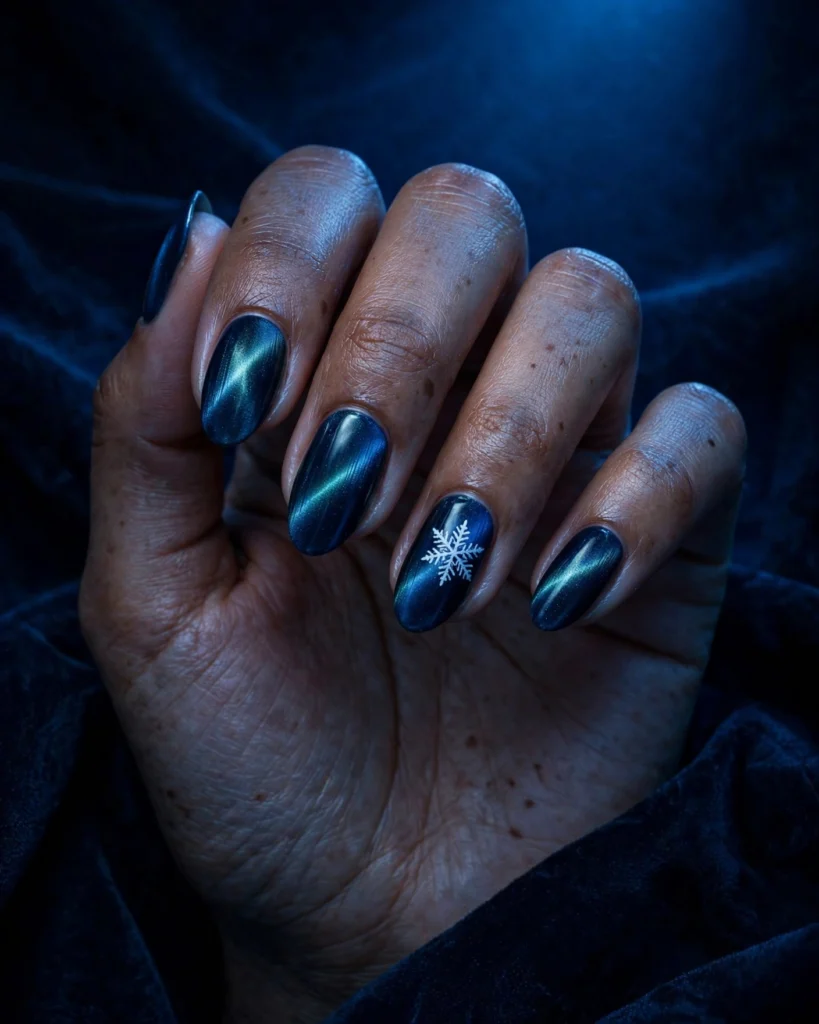
Magnetic blue cat eye polish with a white snowflake on top. Paint the snowflake only once the cat eye layer is dry, so the shimmer underneath stays where the magnet put it.
16 Snowflake ombre
A sponged gradient from icy blue at the cuticle to white at the tip, with two small white snowflakes over the blue. The fade looks like frost creeping up the nail.

17 Nordic sweater snowflake
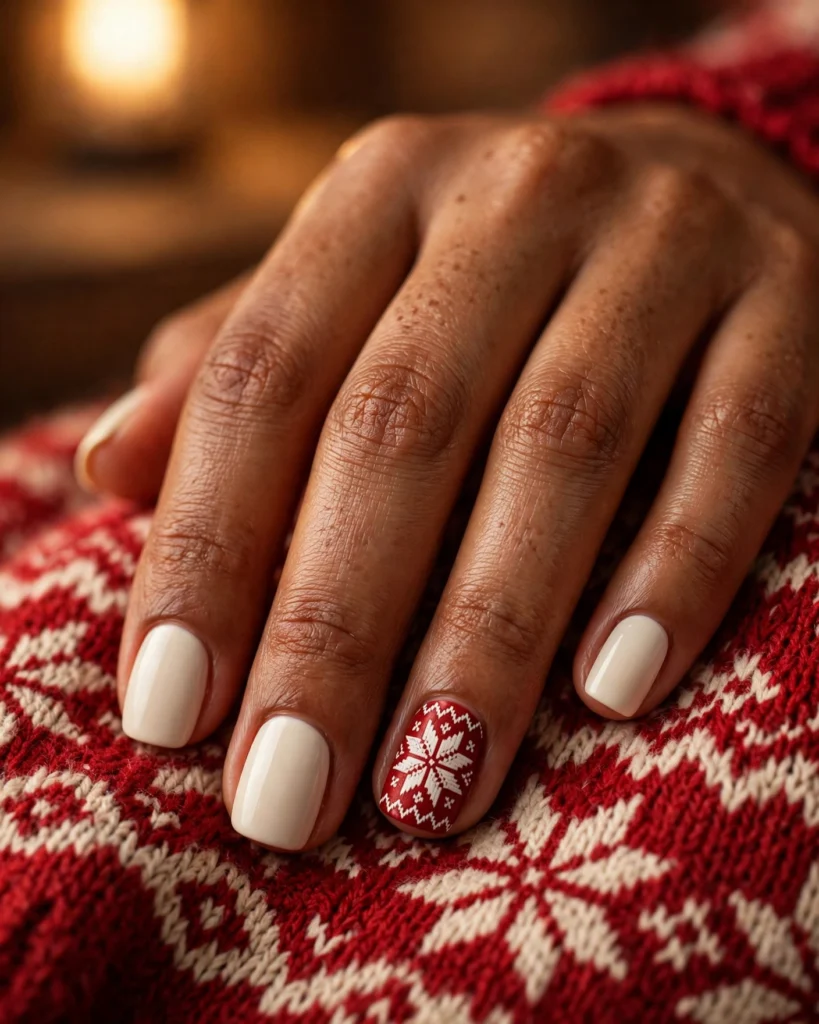
A Fair Isle pattern on one red accent nail: a white snowflake motif with small zigzag borders above and below. It takes patience, but it reads as a cozy sweater from across the room.
18 Raised 3D snowflake
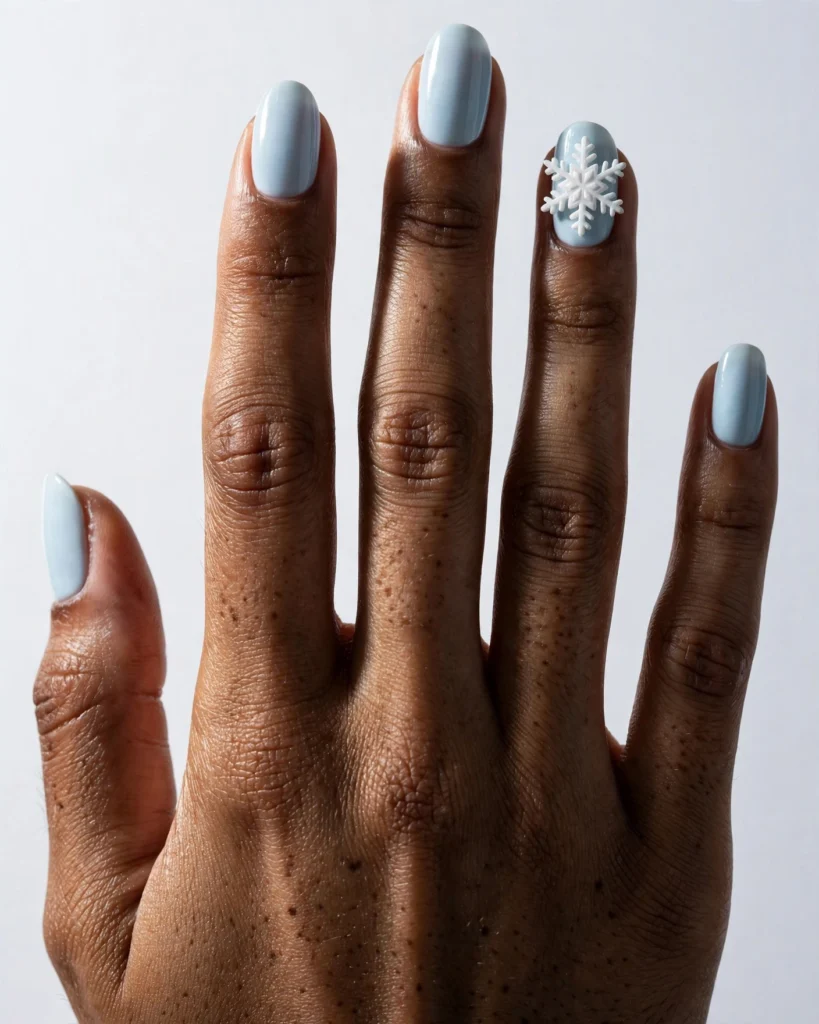
A snowflake built from thick gel so it stands up from the nail like carved ice. Paint the arms with a thin brush and cure, then add a second layer at the center to raise it further.
Wearing snowflakes from December to February
Snowflakes outlast every other holiday motif, but the colors around them decide which season the set belongs to.
Before Christmas, pair snowflakes with red, emerald, burgundy, or gold. Burgundy with a gold snowflake and emerald with a silver snowflake both sit happily next to Christmas decorations.
After New Year, switch to blues, grays, lilac, and white. Slate blue dots, matte charcoal, and the snowflake ombre read as winter rather than holiday, so they look current well into February.
For one set that covers both, navy is the safest base. It sits beside Christmas colors in December and still looks seasonal in late January.
For more holiday shades, see December Nails. For quick designs that need almost no art at all, see Simple Christmas Nails.
Common questions
Why do my snowflakes look like stars?
Usually because they have five or eight arms, or no branches. Give them six evenly spaced arms and add small V branches to each one.
What can I use instead of a dotting tool?
The rounded head of a bobby pin or the tip of a toothpick. A toothpick also makes good thin arms if you drag it lightly.
Can I wear snowflake nails after Christmas?
Yes. Snowflakes are a winter motif rather than a Christmas one, so they work through February, especially on blue, gray, or lilac.
Which designs work on short nails?
Micro snowflakes, snowflake water decals, and dot snowflakes all fit short nails. The oversized snowflake and the Nordic sweater need a medium length to show their detail.
Do I need gel?
Only for the raised 3D snowflake. The velvet blue design works with regular magnetic polish as well as gel.
What colors make white snowflakes stand out most?
Navy, slate blue, emerald, burgundy, and charcoal give the strongest contrast. On pale colors such as lilac, a thin gray outline helps the snowflake show.